
In my time abroad, I realized that I had only thought of “art” as the accumulation of strokes from a wrist that found itself being situated within a frame. I was also under the impression that you must appreciate said art with your own wrists crossed behind your back in a museum.
I studied abroad in Valencia, Spain, and I was taught that this limited definition of art was not allowing me to open my eyes to see how art shapes my everyday life. In my class, “Introduction to Spanish Art”, we talked about architecture for the first six class sessions. Through these six weeks, I realized that architecture itself is art, and it was this reframing of art that allowed me to not only grow appreciative of architecture but also understand how architecture itself shaped me and my actions.
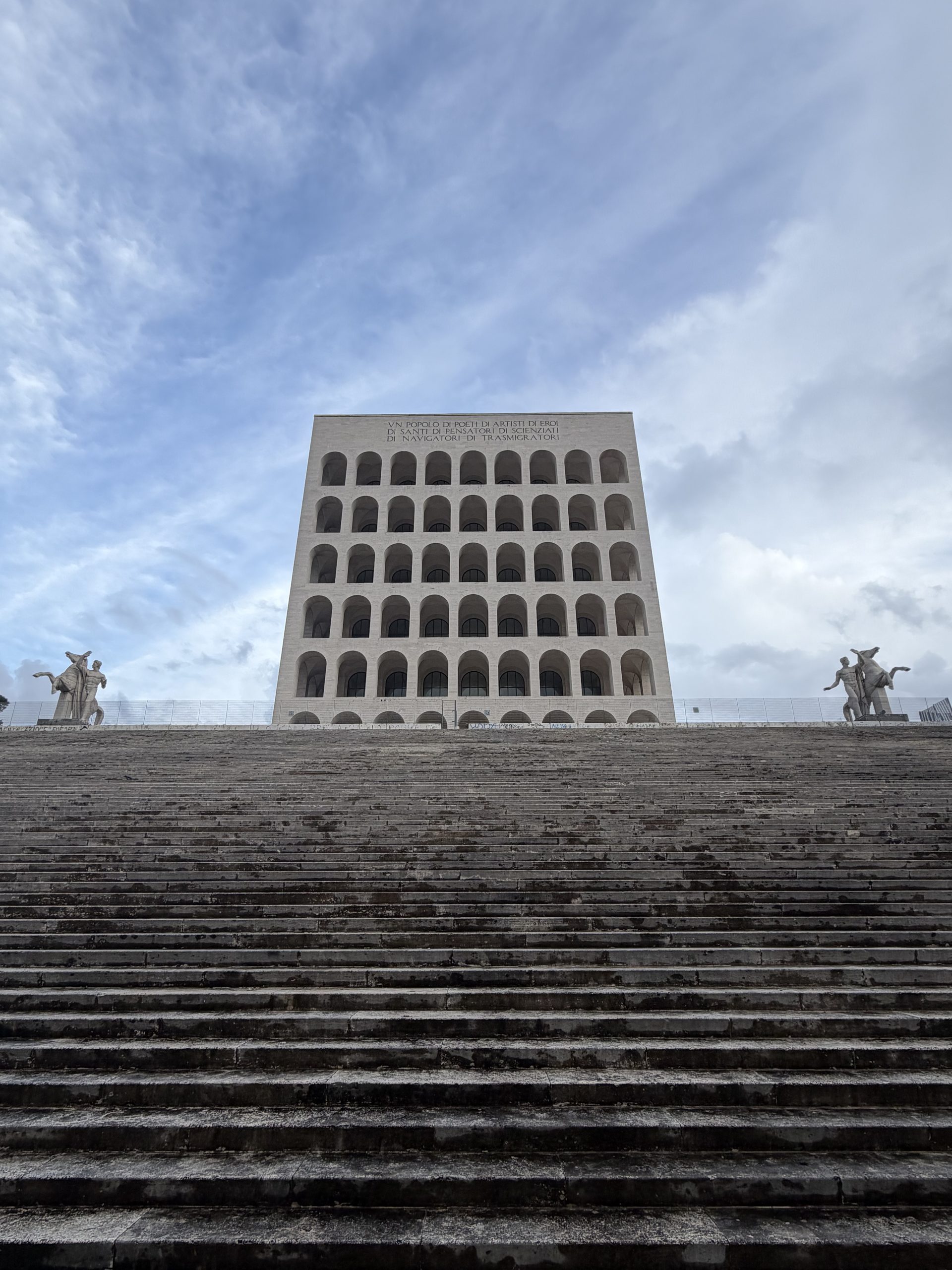
I wanted to personally experience what a former fascist area could feel like during my time abroad. As a rhetoric and Spanish major, I understand how words can shape someone’s beliefs, values, and actions, but I realized that architecture could fill in the time that you are not speaking to mold someone’s “personal” ideas and actions just the same. A great example of this is when I was able to visit Rome, Italy, but more specifically, the Italian neighborhood EUR that Benito Mussolini, an Italian fascist dictator, inspired and that was built by his rationalist architects.
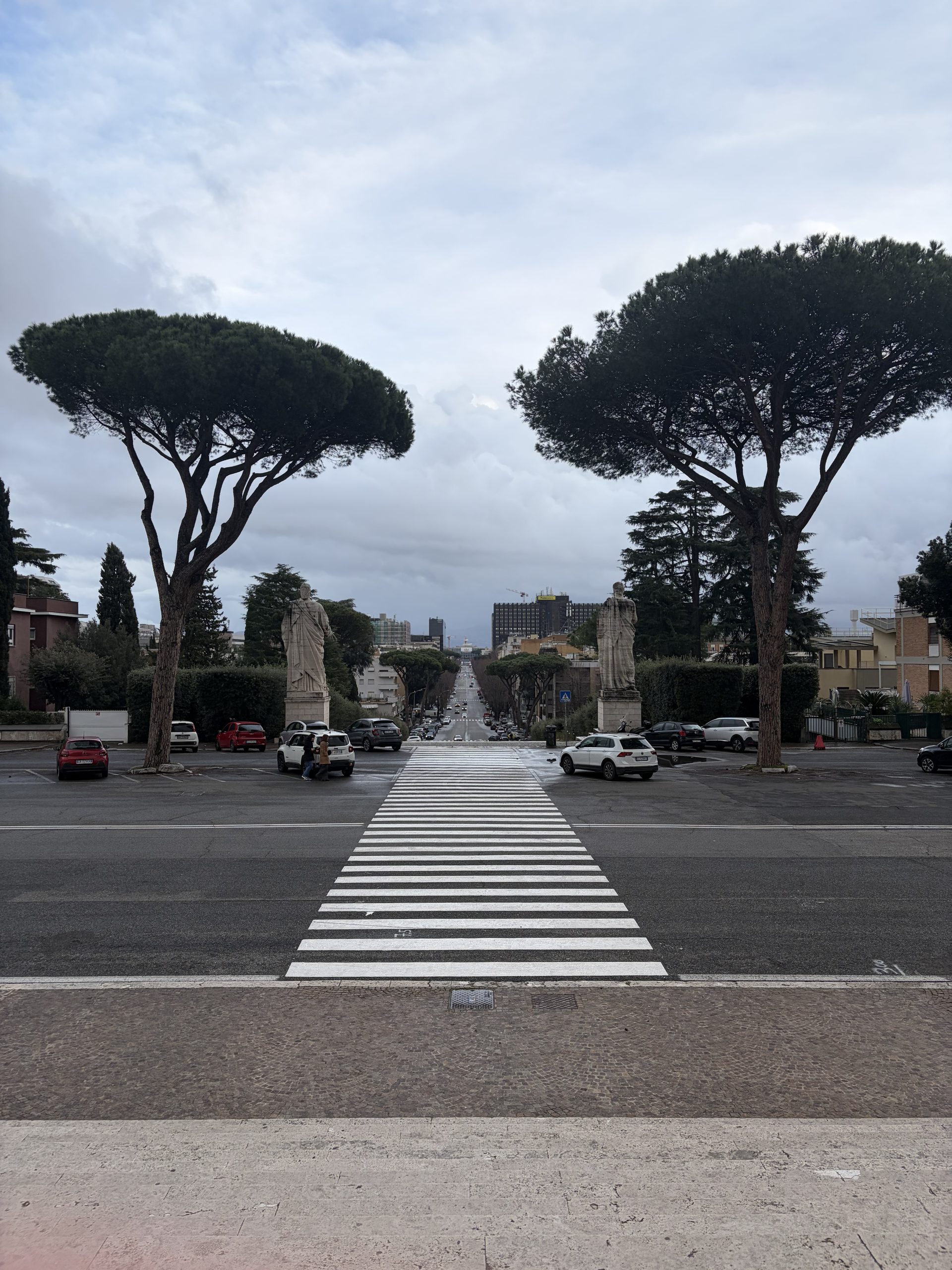
The neighborhood quickly set itself apart from the typical Italian vibe. EUR was built with fascism as the main driver, a driver with the name of “Rationalism”. The tight streets filled with Vespas suddenly widened to comfortably fit cars. The petite buildings changed to goliath concrete structures, and the cute plazas that you just happened to find in Rome disappeared to reveal strategically placed streets and sites. Streets were widened to be able to hold fascist parades and celebrations, ornate decorations were replaced by geometric shapes and sharp lines, but some “classic” Roman designs were kept, including arches, domes, and marble.
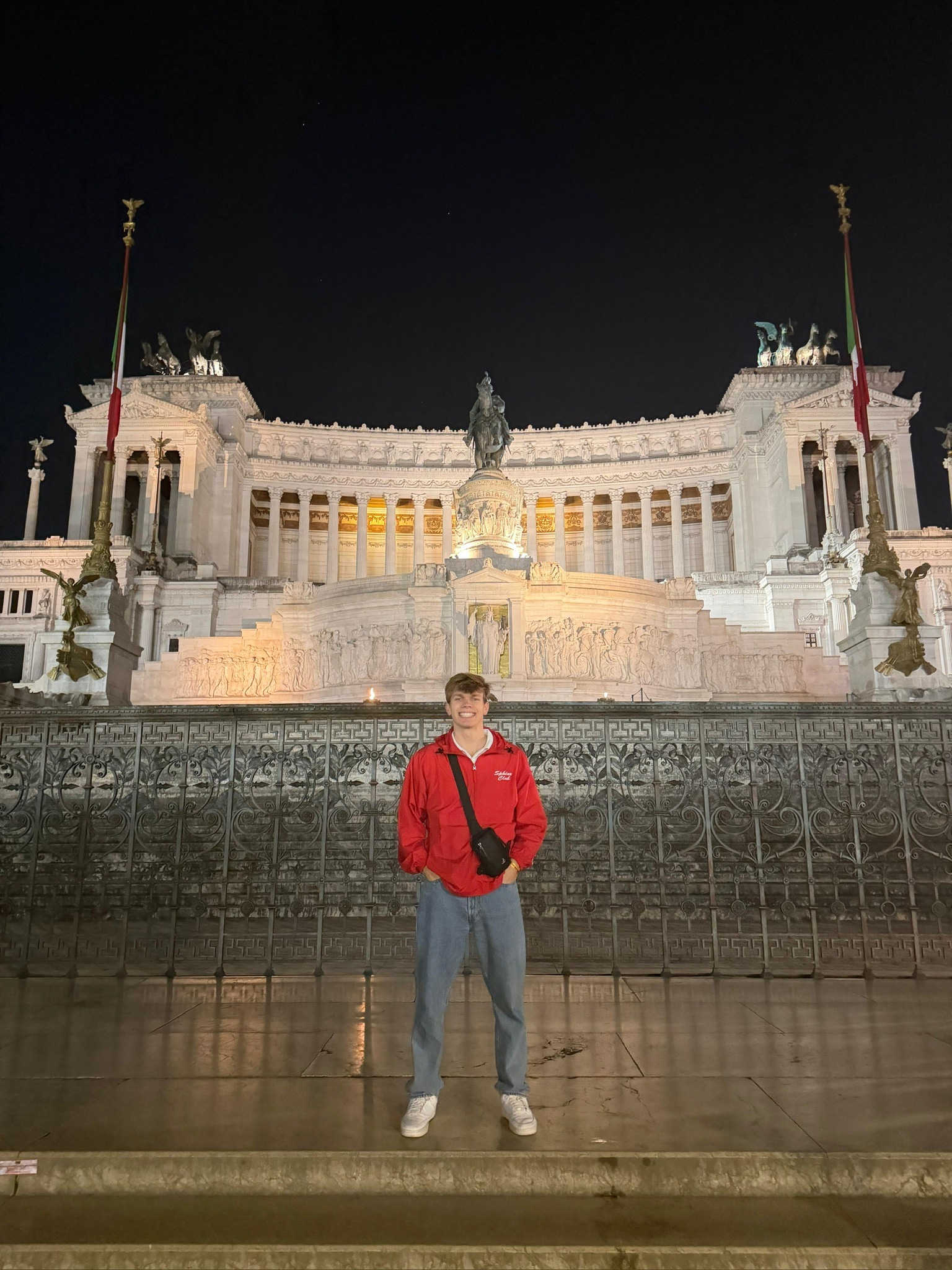
Before my time abroad, I wanted to learn more about areas fascism tainted, and how its repercussions can still be felt today. After my trip to Rome and to the neighborhood EUR, I experienced how Mussolini deliberately built functional architecture to keep his rationalistic style around his past years and understood why many other morally evil people have historically done the same. For a political ideology that needs the common man to believe one person’s every word, architecture unconsciously shapes the common man’s actions and translates these ideals into a physical reality. A concise quote from Walter Benjamin, a German philosopher and critic, stuck out to me in my search to tell the story of why architecture mattered so much to fascists. Benjamin stated, “The logical result of fascism is the introduction of aesthetics into political life.”
– Bryce Kinnaman ‘27

