Summer 2024 – Spain
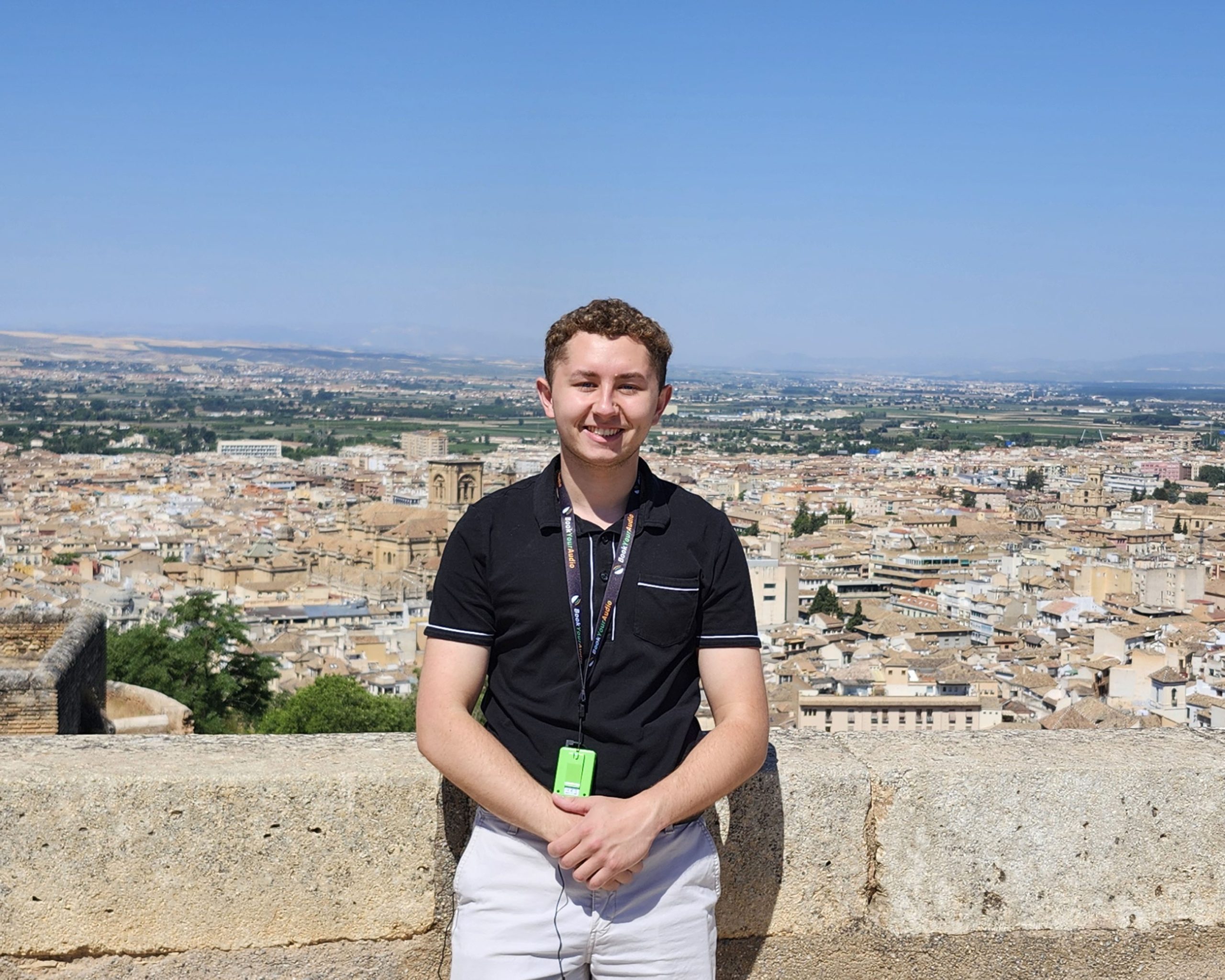
Over this past summer, I was fortunate enough to study in Granada, Spain. While in Granada, I participated in a course on Islamic history and culture. In this course, the professor often provided information and locations where the students could visit and see how Islam influenced Spain throughout the centuries. The most prominent among these locations was Cordoba, which served as the capital for the aptly named Emirate of Cordoba.
After learning about this ancient capital, I decided to visit the city. Waking up on a Saturday morning at 5:15 a.m. to catch an early train was not an ideal start, but it was the best option to arrive early and experience as much as possible in one day. While riding the train, I reviewed my notes about the city and its historical significance to pass the time. After arriving, I walked to my first destination – The Alcazar – where I scanned my ticket and walked into the fort.
The first thing you notice about the Alcazar is how important this castle was in many periods in history. Upon entering, you are greeted by Roman ruins that housed soldiers and others who assisted the Roman military. From here, the path splits into the gardens or the museum portion of the fortress. I visited the museum first where I saw a room that contained a large wooden bust of Christopher Columbus. Later, I would learn from a plaque on a wall that the Catholic Monarchs decided to finance Columbus’s expedition that would lead to the colonization of the Americas in the Alcazar.
The walls of the fort continued to unveil secrets as another museum label mentioned that this castle served as the Catholic Monarchs’ staging grounds for the siege that would eventually topple Granada and bring an end to almost 800 years of Moorish rule in Spain. After standing in the highest tower in the castle, and walking through the Moorish gardens – where I encountered a pond of fish that follow the tourists who walk around their watery home – I decided to visit the Mezquita.
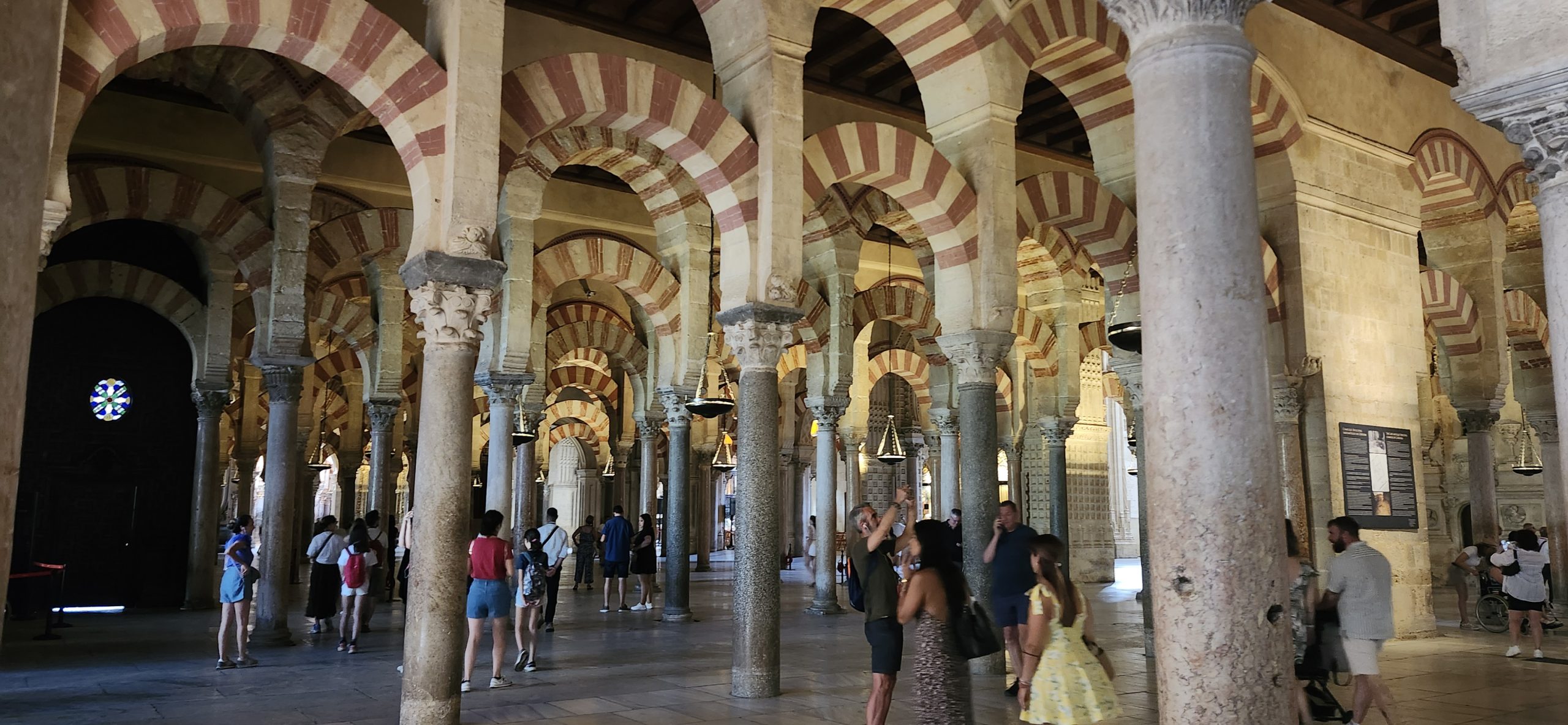
Although the Mezquita was amazing in its own right, the history behind it is just as fascinating. I would later learn in my Islamic culture and history course that the Mezquita was once a mosque that expanded over centuries but was eventually converted into a cathedral after the city was conquered by Christian kings from the northern part of Spain. The building itself tells this story and many others as almost immediately after walking into this converted cathedral, there is a small section of glass that stands apart from the rest of the floor. In this section is an excavated part of the Roman building that the Emirate built over.
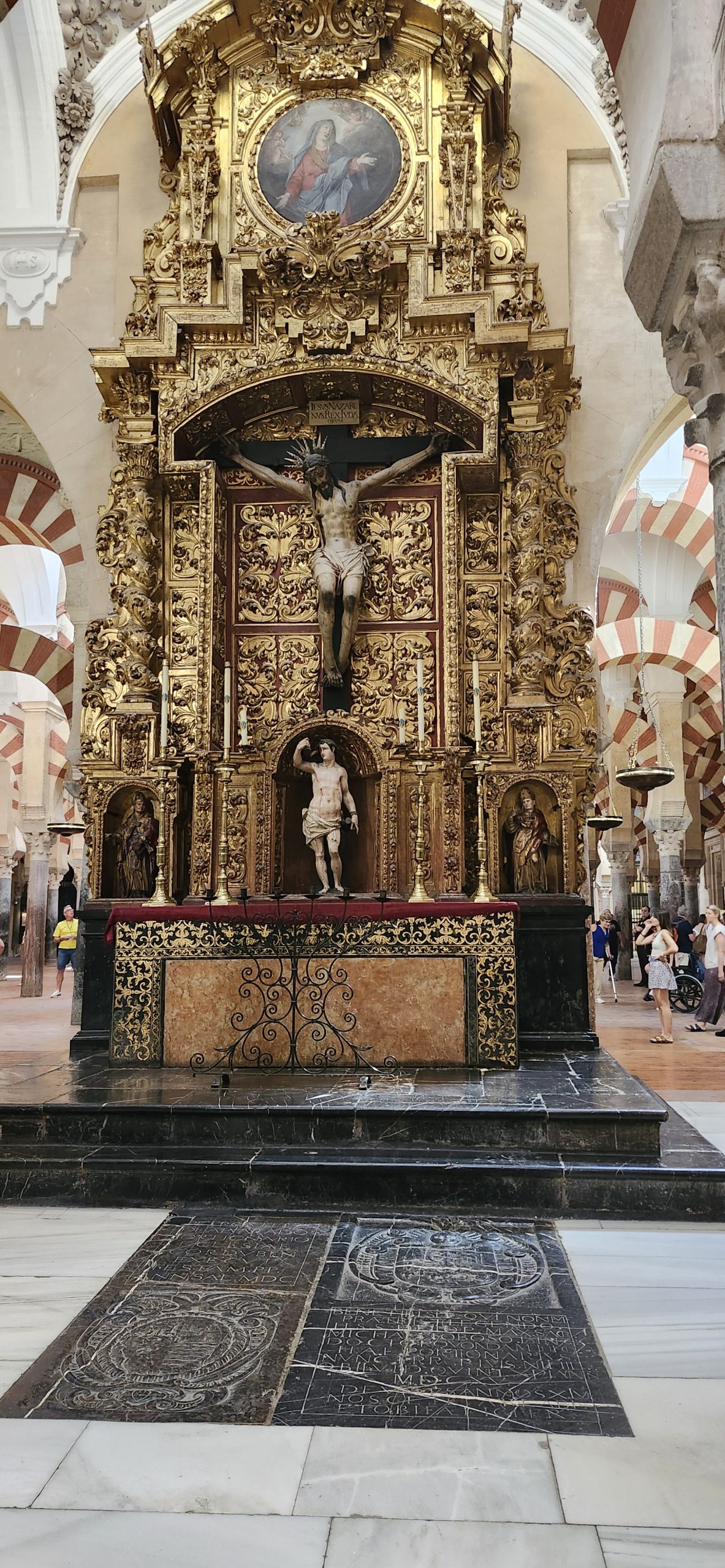
Walking through the rest of the museum you are greeted by literally dozens of altars and artworks that depict various saints, crucial moments in Christian and Spanish history, and some remnants of the building’s Islamic origins. One entrance stood out from the rest to me as it appeared that the wall was not carved like almost every other piece of Islamic art, but instead was made of various stones. In the course on Islamic culture, I learned that this entrance was the result of a relationship between the Byzantine Empire and the Caliphate of Cordoba exchanged knowledge and even skilled artisans who combined their unique art style to create this very entrance.
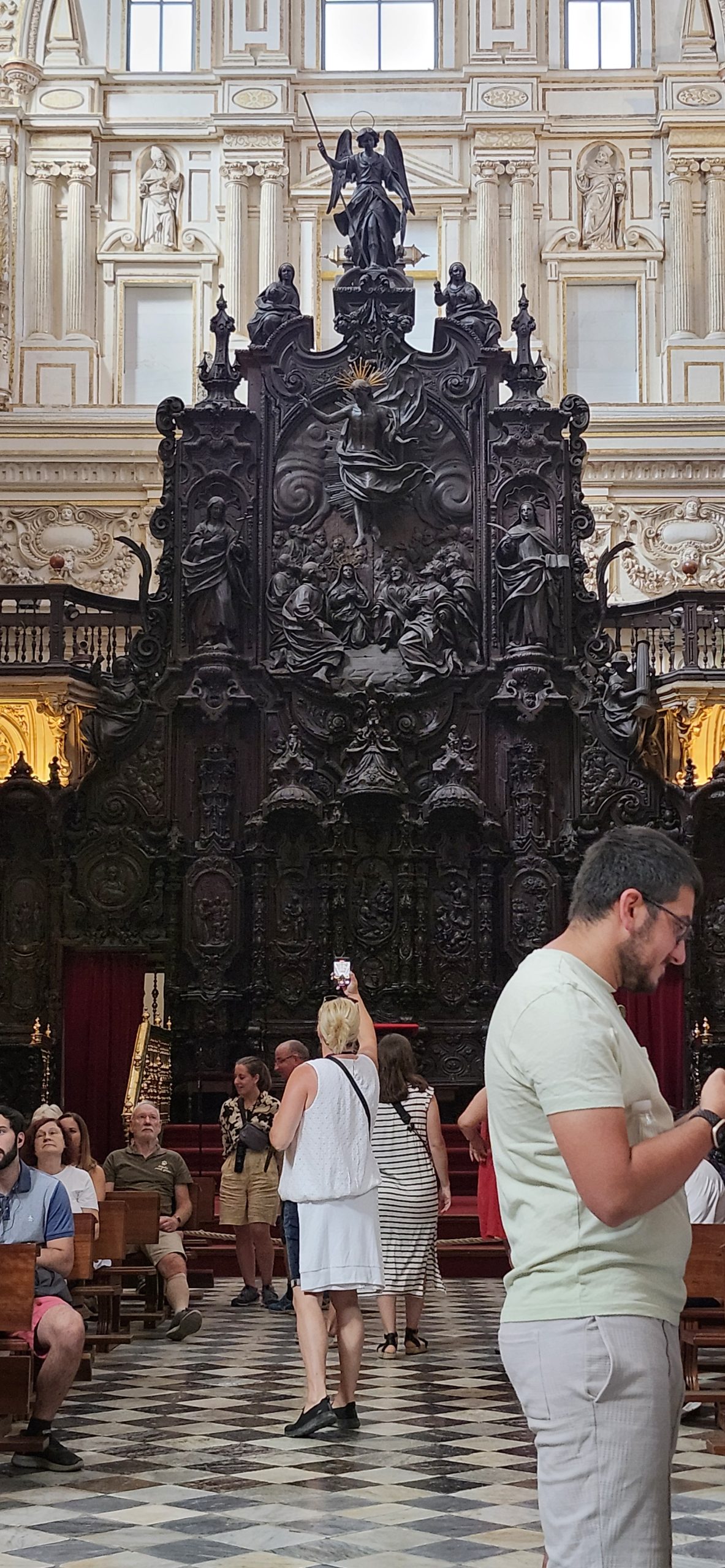
At this point in the day, the Mezquita was beginning to become less crowded as people were leaving for lunch. As I was tired from walking and waking up early, I decided to sit down in the cathedral, and that was when I noticed the intricacies in the art. The Christian rulers ensured that their art would stand out just as much as the Caliphate’s rulers who came before them. Everywhere I looked, there were intricate details in every crevice of the building. From the facial expressions carved into the faces of angels that looked down on me in the center dome to the golden crown atop a dark black wooden statue of Jesus Christ the beauty of the cathedral resonated everywhere I looked. Soon, I realized that I had become lost in the art for almost an hour and a half, and I started my trek back to the train station.
During the ride back, I sent photos to my mother of my trip, and texted my roommate about my return. However, I spent most of my time reflecting on my time in Spain at this point. I admired beautiful landscapes in the north of the country, experienced the comfort of high-speed trains, and witnessed how history literally shapes the environment that people grow up in. In short, I was able to experience history in the flesh and made many memories in only a month.