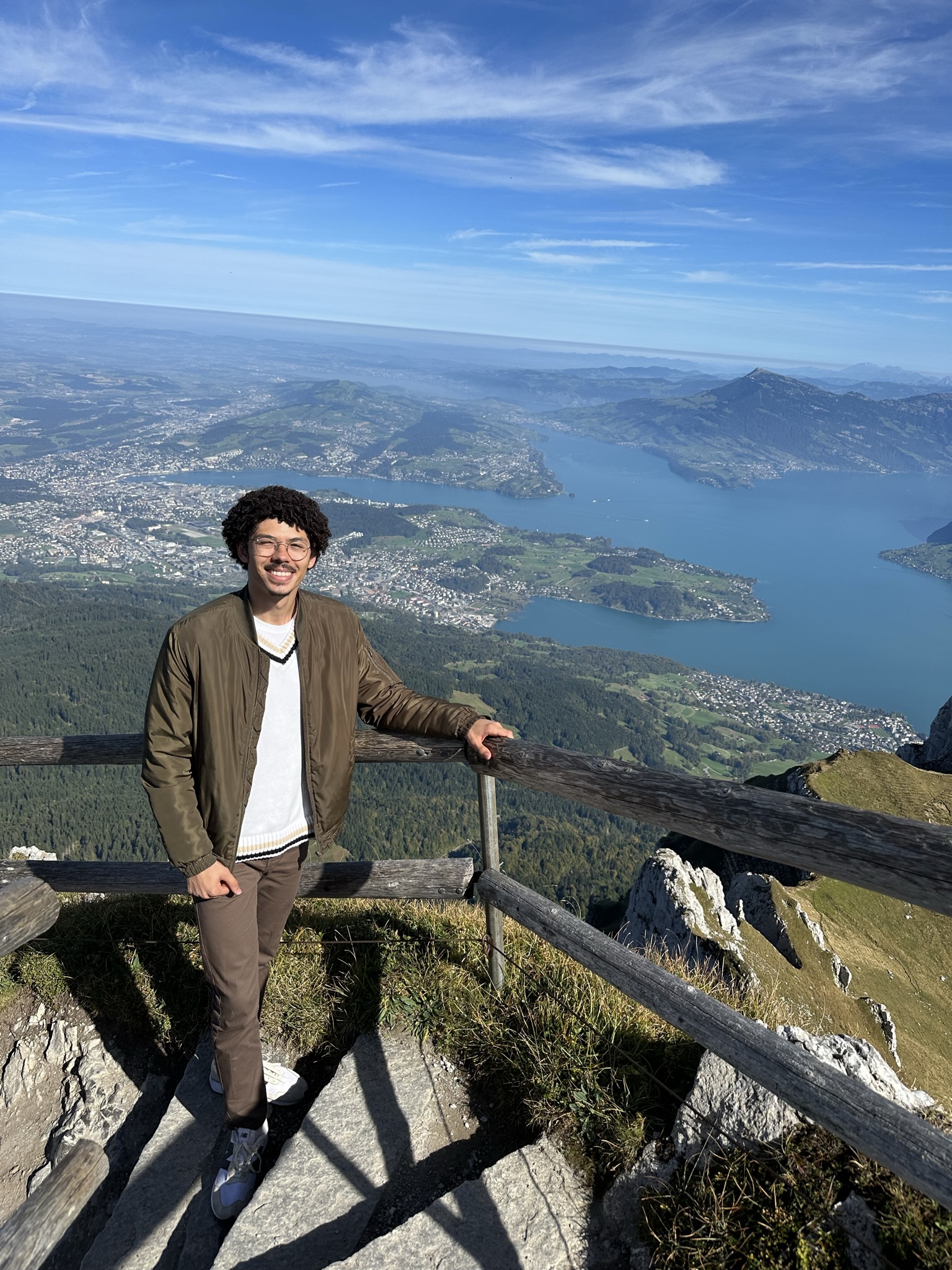
Christian Gray ’25
On a rainy day, I meandered through the Van Gogh Museum of Amsterdam. Located in what used to be the southern border of the city, the museum rests in a park behind the grand Rijksmuseum, surrounded by classic architecture. Upon every floor of the museum, I came across hallmarks of art history: “Sunflowers,” “Almond Blossom,” and the forever-iconic “Self Portrait.”
I made my way through the crowds to show my reverence for these works, but I found myself stopped at a humble painting buried in a corner of the museum. Away from the hordes of students and tourists, I was suddenly absorbed into Van Gogh’s world.
“The Garden of the Asylum” is a small painting—only 28×30 inches. Yet in the limited confines of this canvas, Van Gogh captures the existence of an entire moment. The painting was made during Van Gogh’s last year of life, when he was admitted to the clinic at Saint-Rémy.
During this time, Van Gogh interacted with several other patients afflicted with a variety of mental conditions, and this influence clearly bled into his art. Every shape is imbued with a deep red tone and outlined by strong black strokes. These aspects coalesce to evoke a sense of anxiety and discontent, which Van Gogh saw in his fellow “companions of misfortune.” In the face of this painting, I felt strangely seen.
A few weeks prior, I was sitting in a classroom of the Vrije University talking with one of my dear classmates. As two psychology students do in the same room, we began discussing the nature of consciousness. Eventually we got to the topic of discussing which art medium can best capture our experiences.
Impressionist art, we decided, does the best job, as it does not seek to portray the subject as it literally existed, but rather how the moment felt to the artist. The skies of Van Gogh’s paintings were not truly as swirly as he painted, nor were the water lilies in Monet’s garden as vivacious as he depicted. However, these artists held the ability to imbue their subjective experience of the scene into their works. As such, they transcend accuracy.
In a way, these paintings capture the world of these artists better than any high-resolution camera ever could. Within the complex colors and contorted shapes lays the emotions that Van Gogh felt on that day; the elegant brushstrokes even recreating the wind blowing through the tree branches. Yes, I saw the garden of the asylum, but more importantly, I saw how the garden existed to Van Gogh on that day in 1889, filtered by every one of his thoughts and emotions.
On some level beneath my consciousness, perhaps I resonated with the pain and struggle that Van Gogh experienced. Maybe that’s why I stood there for ten minutes until my friend came up to me. I still have a postcard of the painting that stays on my wall, and I often find myself getting lost in it all the same.
I walked away from the Van Gogh Museum having gained a deep appreciation for impressionist art, one which follows me to this day. I am deeply grateful for the Givens family and Wabash College for facilitating my time in Amsterdam. My experiences were invaluable to my development as a student and person.