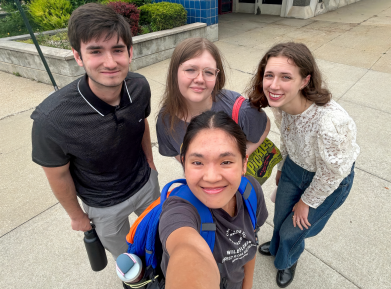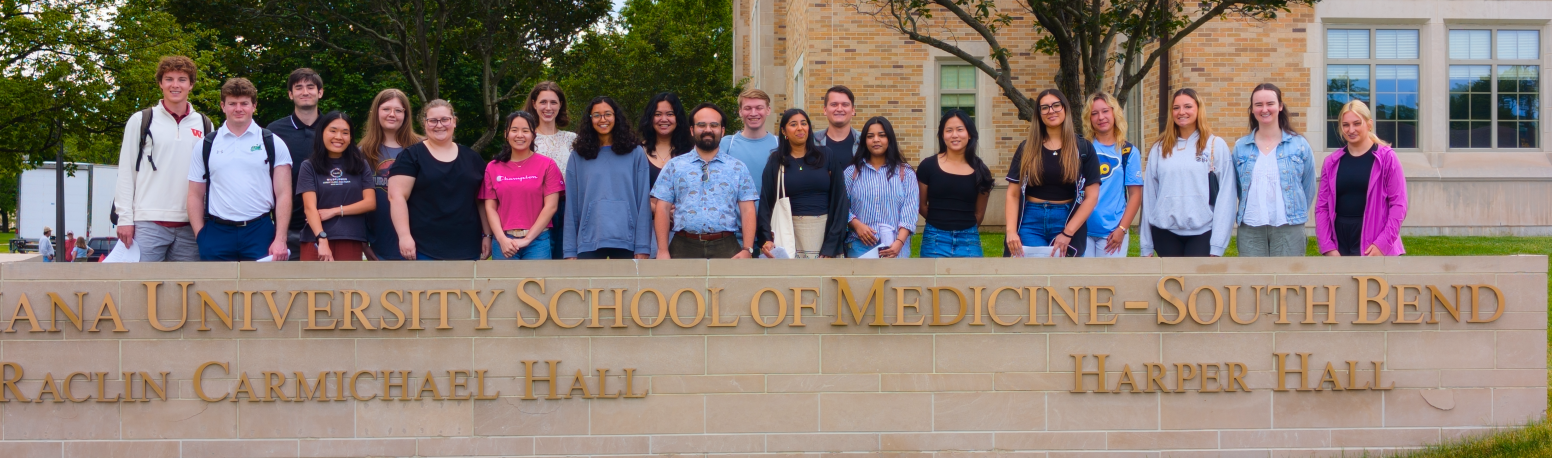
This summer, I had the opportunity to participate in the S-CHIP program through Indiana University School of Medicine. This program allowed me to experience and learn about health equity while working with the South Bend community. Through this program, I also got to work with the local non-profit REAL Services. Specifically, I worked at the Portage Commons Senior Enrichment Center, one of the only senior centers located in South Bend. There, I helped run events that helped keep our members independent.
When I wasn’t working with REAL Services, the rest of the S-CHIP members and I were partnered with another local non-profit called Imani Unidad. Imani Unidad was a relatively new non-profit to the community, and our main objective was to go door to door to get the community’s input on Imani Unidad. We did this by giving out anonymous surveys with various questions about how they perceived Imani Unidad, their neighborhood, and what Imani can do to help better their neighborhood. After we gave out enough surveys, some of the S-CHIP members created a presentation on the data and presented it to Imani.
At the very end of the S-CHIP experience, members split up into groups and created a project proposal based on a need that wasn’t being met in the community. For our group, we found that food insecurity and community resource access were key problems to focus on. Our solution was to create Mini Free Food Pantries in parts of the community that needed it most. These would be boxes full of non-perishable food items, hygiene products, a list of community resources with contacts, etc. We created a slideshow to present in front of members of a plethora of different non-profits in the area, and we even received $5000 for the start-up of our project.
This experience was very influential in my goal of pursuing a career in medicine. As a student, you learn about science and health, but through S-CHIP I was able to see another side of healthcare and how different circumstances in communities can shape people’s ability to receive good health. I want to thank the head of the S-CHIP program, Joe Kotva, and my supervisor at Portage Commons for making this experience a truly wonderful and educational one. Lastly, I also want to thank Jill Rogers and Wabash donors for making this experience possible.