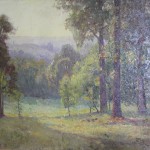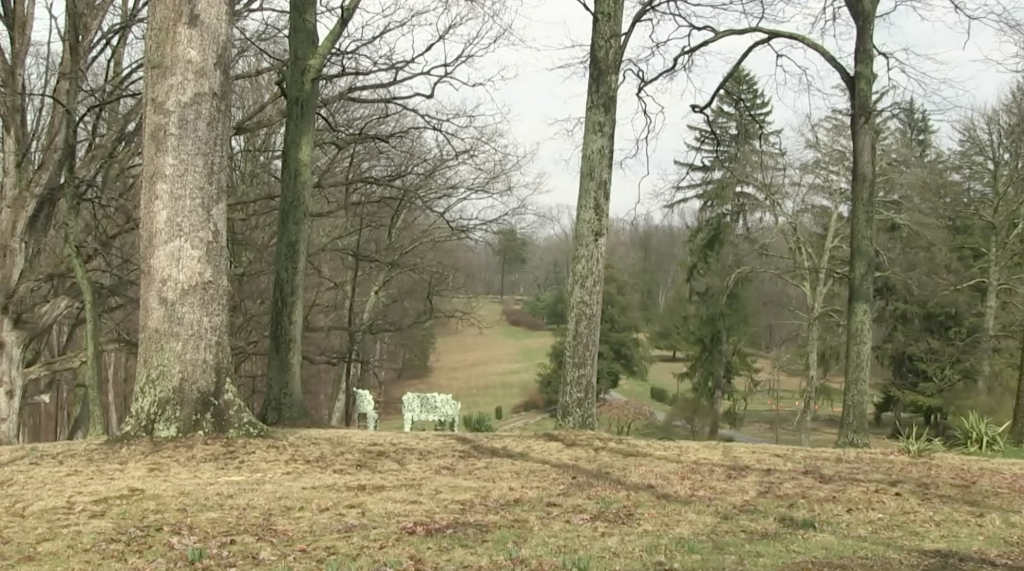
The View of T. C. Steele’s “Afternoon Sunlight” in 2015, from his home in Brown County.
From the beginning, Steele was interested in nature and its beauty. Even while being known for his portrait paintings, he still admired the environment stating in 1870 that he, “love[s] nature in all her beautiful forms – I have felt a strong desire to explore the material world.” He even stated that at his “early convenience”, he wanted to start doing landscape compositions.
Most of his observations of nature came during his times painting outdoors. He felt that it was vital to have “true familiarity” with the changing seasons and the times of the day with a location in order to capture its true artistic beauty. It shouldn’t then come as a surprise that he had a fascination with the “visual change” of each day and season and how that alone provides the subject matter for a canvas.
Many others have noted T.C. Steele’s love of seasons. Indiana University’s professor, Alfred M. Brooks, stated that Steele’s ability to “record the year’s cycle in its endless changing, spring and summer, autumn, winter, and not only the seasons but the weather; snow, rain, hail, mist, sunshine and cloud, heat and cold, darkness and light” were so inspiring that he said his works are “nature’s true portraits.”
Back to the main page on T.C. Steele, Afternoon Sunlight