Some projects redefine how you see your abilities and ambitions. For me, the Dill Fund project did exactly that. With the support of the Dill Fund Grant from Wabash College, I spent the summer building a system that blends traditional options pricing models with the predictive power of machine learning.
I built a hybrid C++ and Python framework to process large volumes of financial data and train models capable of forecasting option prices. Using C++ for high performance computations and Python for data analysis, I implemented Random Forest and XGBoost algorithms on historical implied volatility data, alongside statistical volatility forecasting and time series models for trading strategy design.
The process involved extensive use of Pandas, NumPy, scikit learn, and Matplotlib. Each step from cleaning datasets to evaluating models deepened my understanding of both market microstructure and applied machine learning.
By the end of the summer, I had reached the goals I set when I began. Dill Fund became a working and scalable options pricing framework that matched my original vision. At the same time, I know there is much more to build, from integrating faster C++ modules to creating a ReactJS dashboard, and I am excited to keep developing it.
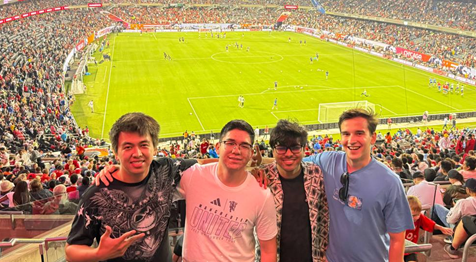
Outside the project, this summer was also a time of personal growth. I enjoyed my break, explored new activities, met new people, and found a healthy balance between serious work and exploration. I leave this experience more confident, disciplined, and motivated to continue pushing my skills forward.
I am grateful to Wabash College for supporting my work and helping me make the most of this summer. Dill Fund is more than just a technical achievement. It is a reminder that meaningful growth comes from stepping outside your comfort zone in both academic and personal life.