
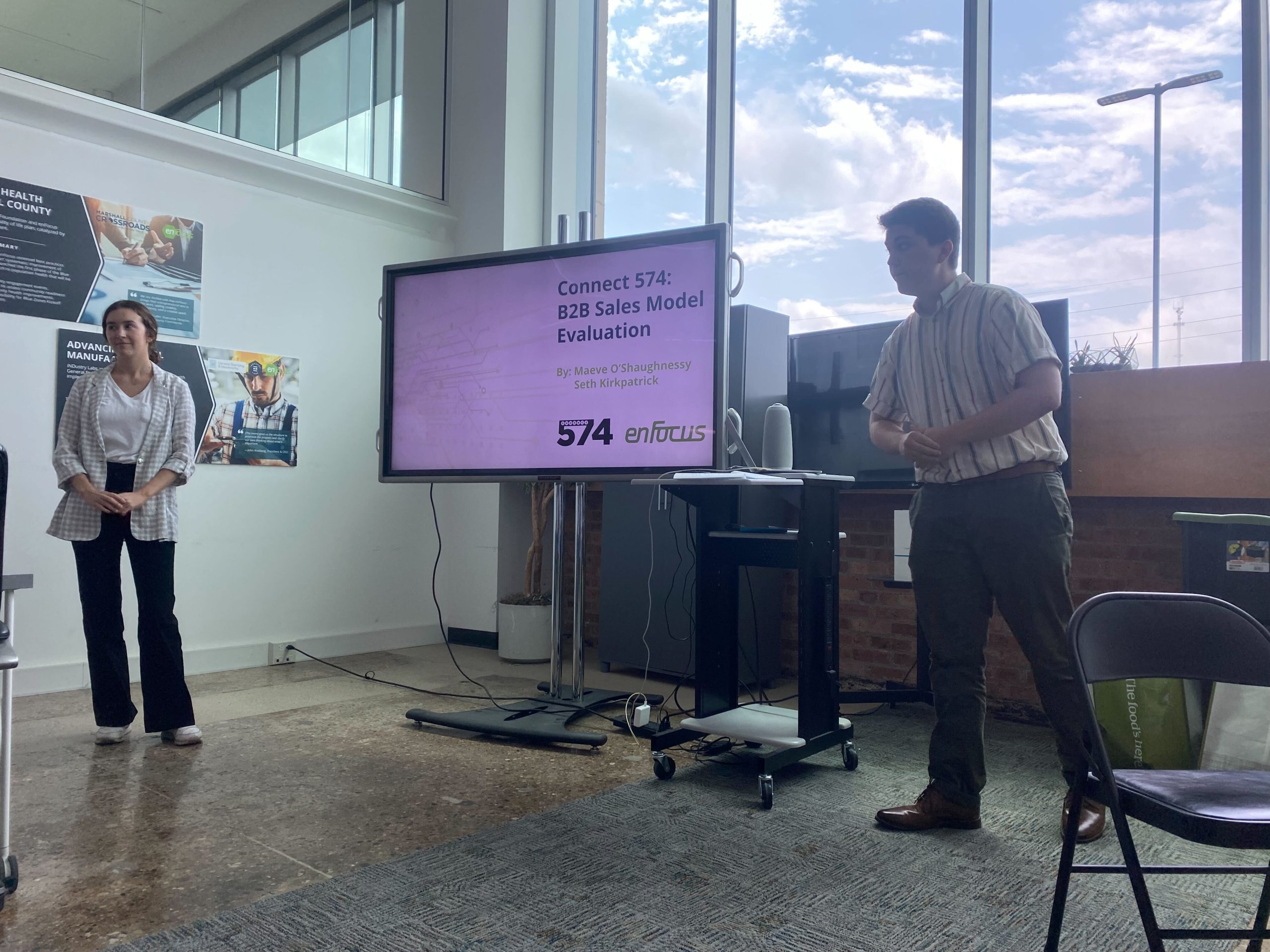
This summer, I was afforded the amazing opportunity to continue my internship at enFocus Inc. for one more summer. Over the past few months, I have been able to dedicate my time to my home- communities of Northern Indiana, contributing to projects that aim to increase the quality of life for all its residents. My first project was environmentally-focused, and examined the various ways in which we could assist South Bend in achieving their goal to become carbon neutral by 2050. In this position, I collaborated with city-officials, spoke to non-profit organizations all across the country, and interviewed various stakeholders, ranging from contractors to directors. On this project, I learned much about various forms of policy, ranging from tax incentives to housing energy code. I did not expect to learn as much as a did about all the ins and outs of energy efficiency, LEED housing standards, and the impact of national and state policy.
My second project focused on economic growth, supporting start-ups, and connecting
workforces across the South Bend region. Here, I was able to gain invaluable insight into how companies
begin and the strategy and approach they implement in order to thrive. Additionally, I learned the value
of information. Throughout my college experience, it became easy for me to brush off things like surveys
or presentations, as they were so common amongst my classes. I knew they were important, but only to
the extent of the classroom. At enFocus Inc., I gained a new view on the value of information collection
and distribution. People depend on information to make important decisions about all facets of their
work, and without the proper knowledge, they put themselves at greater risk.
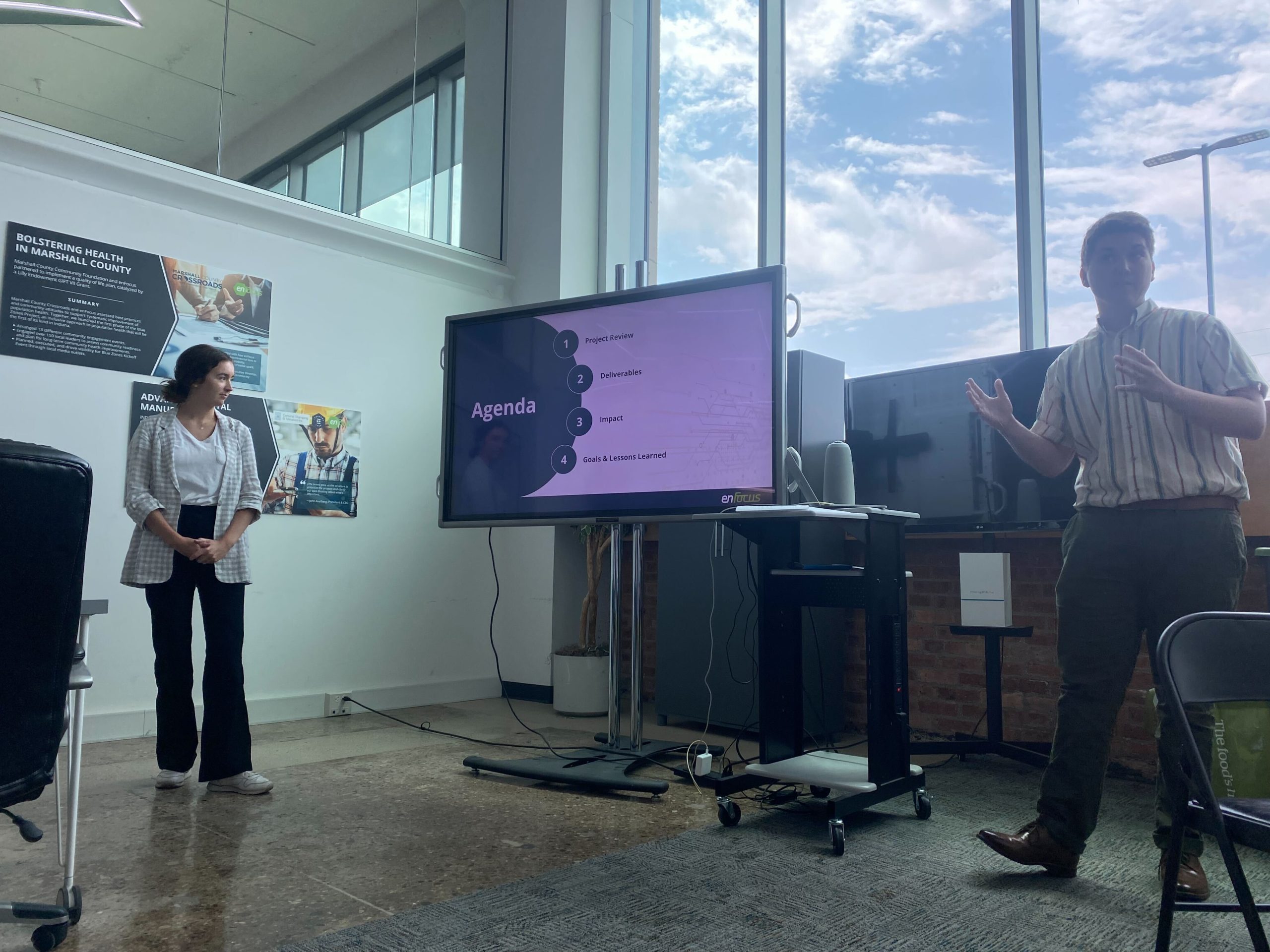
This newfound view on information extends to all aspects of my internship over the course of the last year. South Bend, Mishawaka, Niles, and Elkhart are all cities that are ripe for growth and development. But, they are different from major cities in one important way: they lack in-depth research. Whenever a project begins in one of these cities, it may be easy to try and compare strategies implemented in places like Chicago, New York, Minneapolis, or even Indianapolis. Yet, the communities of Northern Indiana are unique; they have their own culture, people, ideas, and views. They can be compared in theory, but until research is gathered on them isolation, unless serious effort is put in to understand their many intricacies, they can never be fully understood. This is why the work at enFocus is so valuable. Not only do they research these communities, they do so while growing them into the best version they can be.
For these opportunities, I would like to thank those alumni at Wabash College that have made this a reality. Without their support, investment, and belief in Wabash students like myself, this would not have been possible.
