

The Stephenson Institute for Classical Liberalism at Wabash College has had another productive year of scholarship from its three post-doctoral Scholars-in-Residence. As the academic year draws to a close, Joshua Ammons, Eric Wilhelm, and Nicholas Jensen have collectively produced a substantial body of new research across public choice, European economic history, and regulatory policy. This reflects the Institute’s commitment to rigorous research, collaboration among students and faculty, and public engagement.
Joshua Ammons: A New Chapter
Dr. Joshua Ammons is departing Wabash with exciting news: he has accepted a position as Assistant Professor of Practice at the University of Tennessee, Chattanooga, in the Rollins College of Business, Department of Finance and Economics. He credits the environment at the Stephenson Institute—student research assistance, paper workshops, and research funding provided by the Institute—as central to his success on the job market.
That success is well-documented in his publication record. Since joining the Institute, Ammons has published or had accepted at least a dozen journal articles and book chapters. Some significant recent publications include “Covert Regime Change and Ideology” in Public Choice (2026), “The Invisible Hand Meets the Raised Fist: Social Movements and Market Legitimacy” in the Journal of Economic Behavior & Organization (2026), and “What Do Women Get from a Successful Revolution?” in the Journal of Institutional Economics (2025). He also co-authored encyclopedia entries on nonviolent action and revolutions for Elgar and Springer, respectively. Across more than twenty conference presentations in 2025–26 alone, at venues from Purdue University to the Law and Society Association Annual Meeting to a Creative Spark program in Europe, Ammons has been a visible ambassador for the institute.
Student and Faculty Collaboration
Also notable at Ammons’ time at the Stephenson Institute has been his willingness to bring Wabash undergraduates into serious scholarly work. That commitment is best illustrated by his collaboration with George Agbesi ’28, a Wabash student and research assistant at the Institute. Together, they co-authored “Betting on Better Governance,” published in Isonomia Quarterly in Spring 2026—and the paper quickly earned attention far beyond campus. In February 2026, the piece was featured at the Financial Times’ Alphaville column, placing this student-faculty collaboration in the same company as work drawn from The Guardian and the Brookings Institution.
The paper argues that decentralized prediction markets built on blockchain technology can replicate core rule-of-law features—generality, equality, predictability—in contexts where traditional governance institutions are failing or corrupt. Drawing on a comparison to how ride-sharing disrupted taxi medallion monopolies, Agbesi and Ammons contend that decentralized price signals can break through information bottlenecks and deliver a technological shock to entrenched institutional structures, with particular relevance to emerging economies. The Financial Times recognition was, in Agbesi’s own words, “a significant milestone”—and the collaboration has continued: Ammons and Agbesi also have a second paper, “The Treatment Your Boards Deserve,” currently under review at The Review of Corporate Finance. This kind of undergraduate co-authorship is exactly what the Institute’s model of mentored research is designed to produce.
In addition to student collaboration, scholars-in-residence and Director Dan D’Amico also work together on their respective research agendas, sometimes resulting in co-authoring new research. One recent example is the recently accepted article “Sanctions Without Sanctimony: Why Do States Impose Sanctions?” from Journal of Economic Behavior & Organization, which includes D’Amico, Ammons, Eric Wilhelm, and past scholar-in-residence Cameron Tilley.
Eric Wilhelm: A European Summer of Guilds
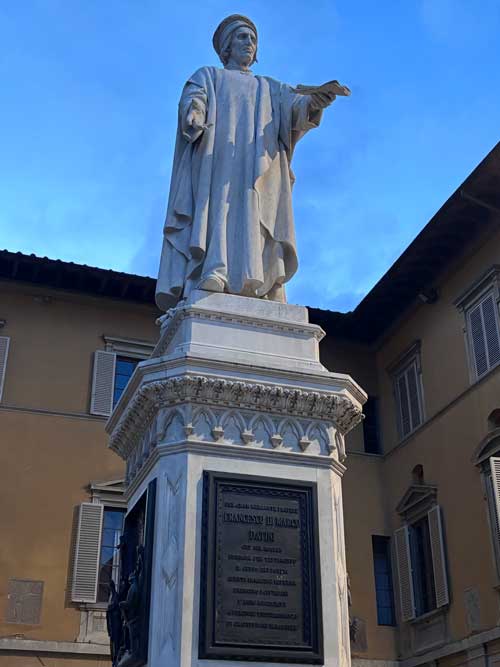
Dr. Eric Wilhelm has just wrapped up a weeklong conference at the Fondazione Istituto Internazionale di Storia Economica (“F. Datini”) and ESTER Doctoral Workshop in Prato, Italy where he presented his work on European craft guilds and urban growth. The theme of the conference is “From craft guilds to unions.” He will be presenting new work on inter-guild dynamics and political competition as bilateral monopolies at the Joint Baltic Connections and Scandinavian Society for Economic and Social History Conference at the University of Jyväskylä, Finland later in June. (Wabash Professor of Economics Joyce Burnette will be delivering the Riitta Hjerppe Lecture in Social Science History at the conference.) Eric is rounding out his European tour at Universitat de València in Spain where he will be presenting a paper on guild representation in city assemblies and municipal debt at a Doctoral School of Medieval Economic History on “Taxation and State Building in the Middle Ages”. Eric hopes to make it back to the States by July 4.
Nicholas Jensen: From Rent Seeking to Absinthe
Dr. Nicholas Jensen has had a productive year across a notably diverse research portfolio. His new article, “Economic Freedom and Rent Seeking: Evidence from US States,” forthcoming in Public Choice, is co-authored with Fernando D’Andrea, Hugo Vaca Pereira Rocha, Vitor Melo, and Zachary Blizard, and acknowledges Institute Director Dan D’Amico for helpful comments. The paper asks an old public choice question: when government grows, how many people get pulled into the unproductive work of fighting over what government hands out? Using state-level data from 2004 to 2019, the authors track employment in two industries that are mostly about chasing those handouts—private legal services and lobbying—and compare it to the Fraser Institute’s measure of economic freedom in each state. States with more economic freedom have noticeably smaller private legal-services workforces; the lobbying result points the same way but is shakier. The most interesting finding is that government spending, not taxes, seems to be what pulls people into this kind of work. In other words, what a state spends matters more than what it taxes when it comes to drawing talent into chasing favors.
A working paper currently under review at the Journal of Regulatory Economics, “Regulatory Rollback and the Smoking Tailpipe,” asks whether states that repeal vehicle emissions testing pay an air-quality cost — Jensen and his co-authors find they do, with median AQI scores deteriorating by roughly three to four and a half points after repeal. On the working-paper front, he is pursuing two intriguing projects: one with Ammons on how electoral incentives shape prosecutor behavior and criminal case outcomes, and a public choice investigation into the political economy of absinthe prohibition in early twentieth-century Switzerland — examining whether the competitive interests of market rivals predicted which cantons voted to ban the spirit.
Jensen also presented at the 2026 Public Choice Society conference in San Antonio and will attend the Southern Economic Association meetings in Houston in November; he was also quoted in a WBIR 10 News segment on gas prices and East Tennessee food trucks in March 2026.
