

For my internship, I spent time in 3 regions of Peru – the coast (Lima), the sierras (Huánuco), and the jungle (Tinga Maria). Each region, although all in Peru, presented unique challenges in a public health setting. The coast juxtaposed wealth and poverty with a literal wall splitting the two sides of Lima in half. The sierras lacked infrastructure, with those living on the outskirts of the already small towns having no access to any care whatsoever. In the jungle, Malaria and parasite-borne illnesses present life-or-death cases, with all sorts of nasty creatures attempting to infiltrate people’s body.
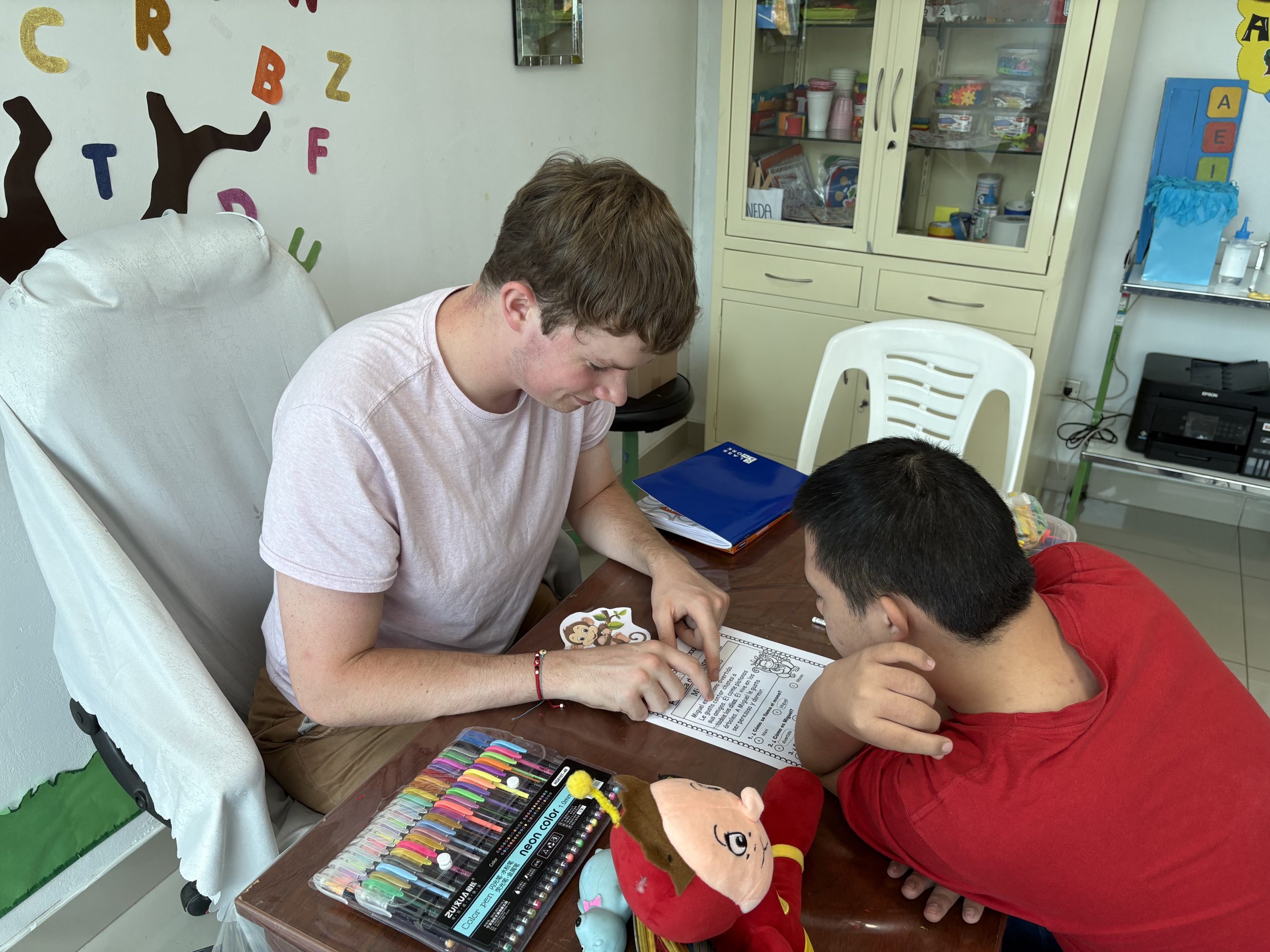
In Peru, the other interns and I primarily focused on preventative education. We designed and presented workshops on topics ranging from proper teeth-brushing techniques to diabetes prevention, with audiences ranging from mom groups to elementary school aged children. Education wasn’t the only work that we focused on, however. In the classroom, we also repainted walls and reprinted posters. Outside of the classroom, we planted gardens, worked with community partners, and further strengthened the Wabash-Peru friendship.
From this experience, I learned a lot. As a pre-med at Wabash, I have always had a very service-oriented mindset, but this month-long internship really narrowed down my scope in terms of direction. As a hopefully future physician, I hope to serve and dedicate myself to at-risk populations the way I saw medical professionals in Peru dedicate themselves. Working long hours in often less-than-ideal settings, the physicians in Peru give themselves to a cause higher and bigger than themselves, which is something I hope to replicate in my own life and work. I also learned the power of listening, and its benefit as a tool of public health. Often, in a scientific or service-oriented perspective, I think that we as a society focus on tackling a problem or solving an issue. However, from this experience, I have fully realized the importance and significance of taking a pause, a step back, and just listening to the people experiencing these problems. I learned more from the people that I met than anything I could ever teach in a workshop.
I would like to thank the GHI teams on both continents, especially Dr. Wetzel, Jill Rogers, Beto Aguila, and Milagros Ramos for the fantastic experience and opportunity.
