

After my internship with Dr. Nelson and Dr. Campbell ended in July, I began a second 8-week internship with the Montgomery County Health Department. A lot of the work I did for Dr. Nelson and Dr. Campbell consisted of reading and researching academic style writing about topics in theology and philosophy. Naturally, the health department required that I switch gears topically—out went metaphysical systems and in came septic systems.
Very few people know the full extent of what a county health department does. The reality—especially in rural areas like Montgomery County, where there is a dearth of primary care physicians, specialists, and many other health-related occupations—is that county health departments function like Swiss army knives and have immense significance for the health of the people they serve. In Montgomery County, the health department oversees pool and food inspections, septic surveillance and permit granting, vaccine programs, water testing, vector control, emergency preparedness, and much more. I received a broad education in the meat and potatoes of public health. One week I might spend most of my time working on health education and awareness materials, and the next could entail learning about septic systems and why they’re crucial to the county’s health. I didn’t understand just how integral a county health department’s services could be to people.
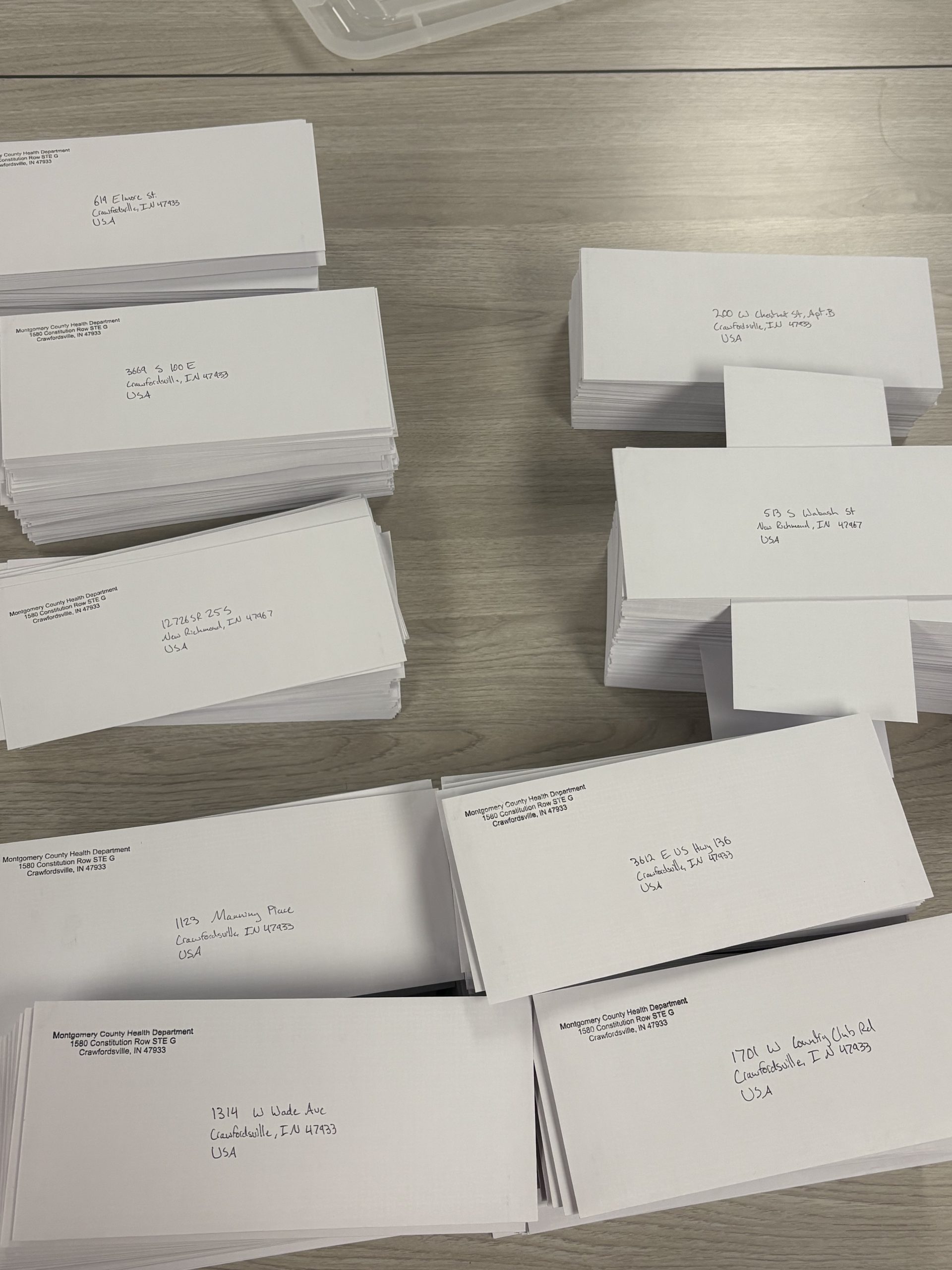
But it is hard to reconcile the vast, wide-ranging efforts of the health department with the seemingly bottomless ocean of needs people in the community have. There is a relatively small group of people across multiple who do most of the public health work in Montgomery County. When I think about the challenges they are up against—which often span generations, have roots in traumatic events, are still viewed with stigma y many, and/or are intimately connected with mental illness—I feel exhausted for them, particularly at a time when public health funding is being slashed in Indiana and across the country. I now know how much health departments do for their communities, and I feel anxious about what stripping them of resources will do to places like Montgomery County. But I also know people who tirelessly devote themselves to the public health, both at the community and individual level. And I was heartened by what, by who, I saw, even if at times it felt like the problems dwarf the solutions.
I’d like to thank the staff of the Montgomery County Health Department, especially Adrianne and Darby, for their generosity this summer. Thanks also to Jill Rogers, Dr. Wetzel, the Global Health Initiative, and anyone who has given to the GHI for making this internship possible.
