
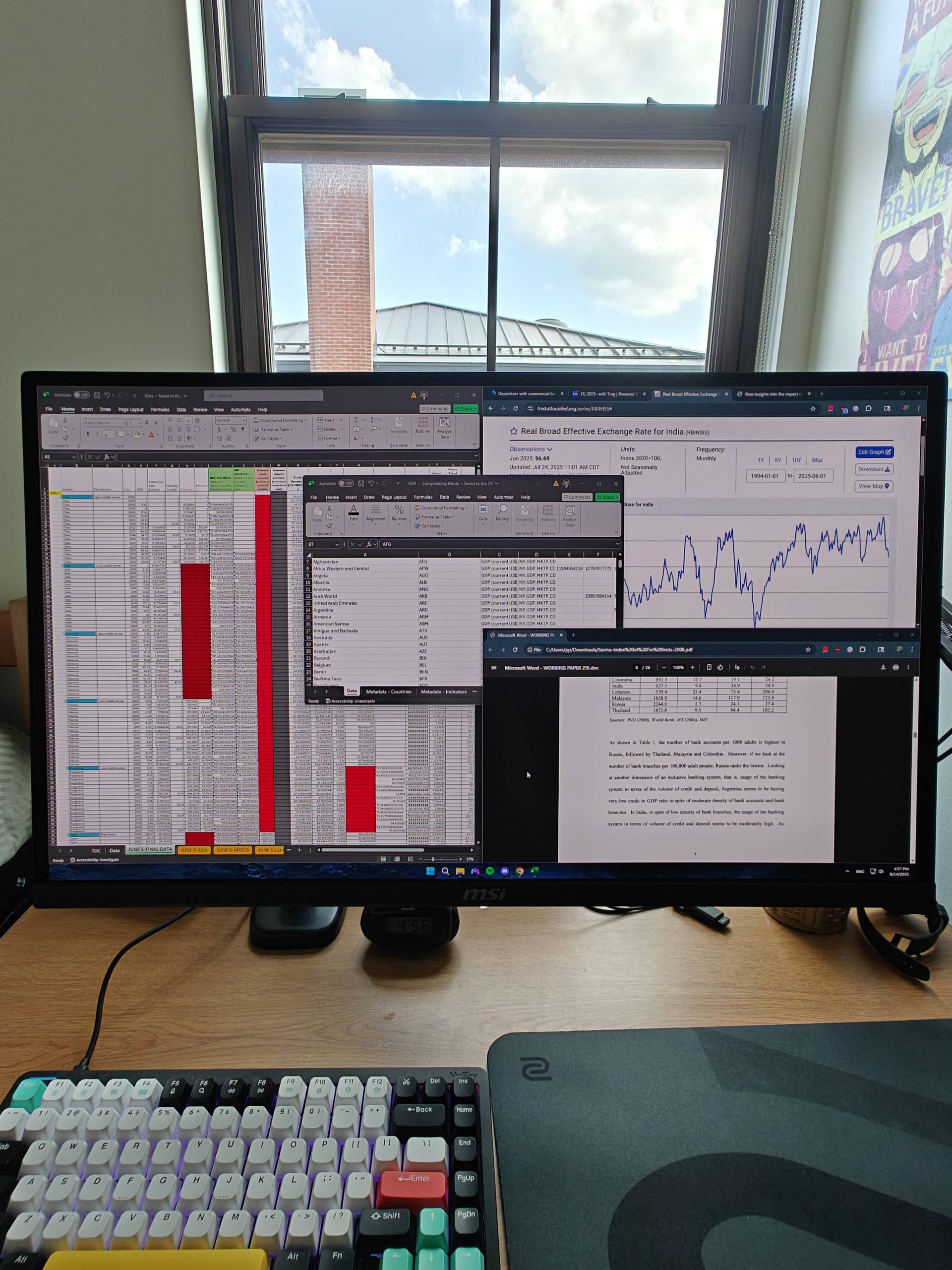
To start my summer, I had the opportunity to work on financial inclusion research with Dr. Saha, a project that ran for a month. Our goal was to explore how access to financial tools (like ATMs, bank accounts, and loans) impacts economic growth across Asian, African, and Latin American
countries. I spent my days sourcing data from trusted platforms, such as The World Bank, FRED, and IMF. To build on existing knowledge and prevent redundant work, we reviewed more than 20 prior research papers focused on financial inclusion. Organizing information for over 100 countries (70 new, plus 30 from Sarma’s 2008 Financial Inclusion Index research). We focused on 17 key variables, from “ATMs per 1,000 people” to “Bilateral exchange rate with US dollar”, then cleaned and structured the data in Excel before running multidimensional regression models in STATA to spot trends.
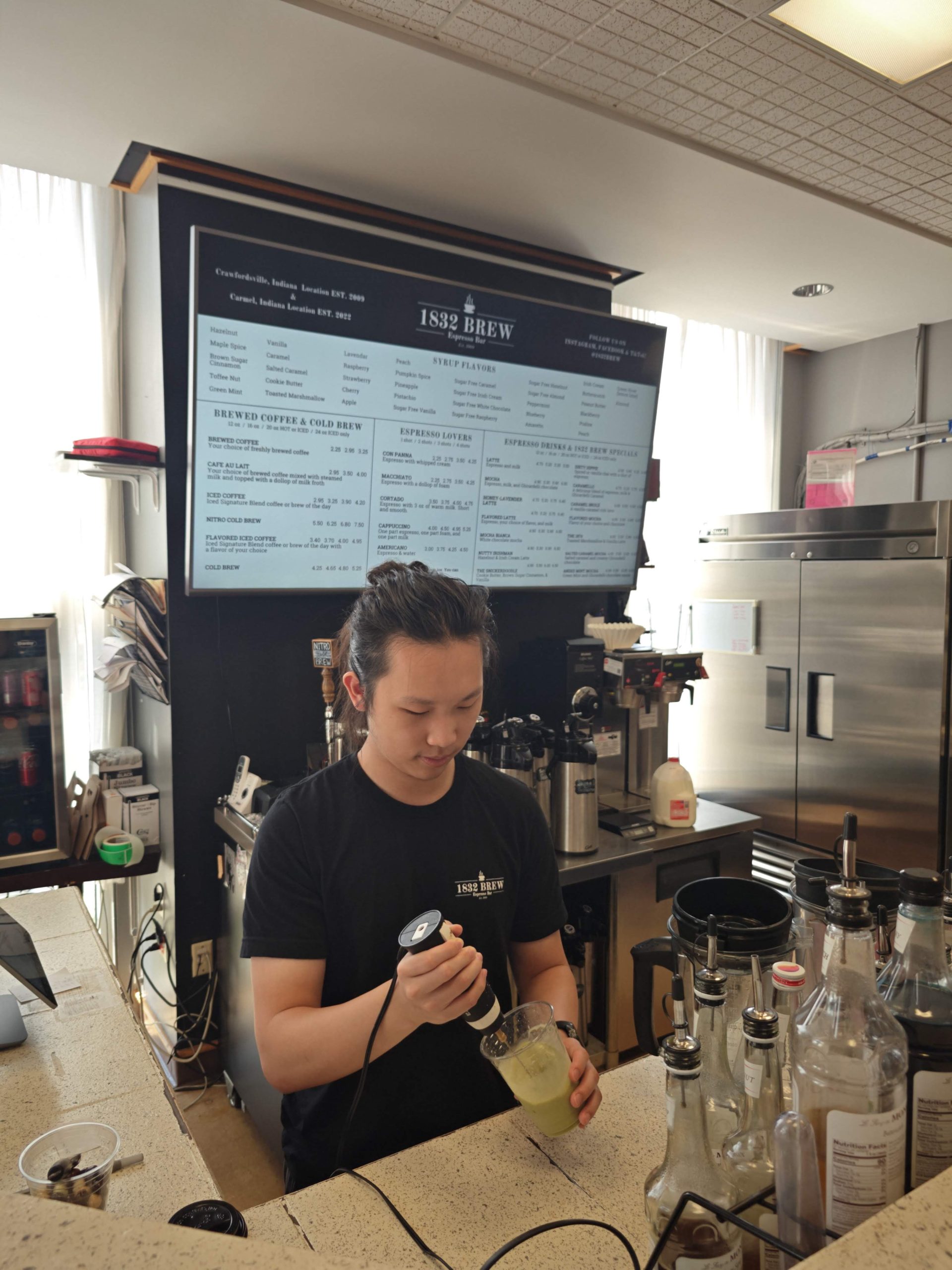
In late June, I shifted gears to work as a barista at 1832 Brew Espresso Bar, a role that lasted until mid-August. My days here were different kinds of busy: arriving at 7:45 a.m. to brew fresh coffee, balancing in-person orders with DoorDash through the day, and prepping weekly espresso for Saturday’s farmer’s market. At first, it felt like a big change from research, but I quickly saw how the skills overlapped. Just like I’d double-checked the data for each country/variable, I learned to double-check customer orders (no one wants a wrong latte!) and stick to routines to keep things running smoothly. The coffee shop wasn’t just about serving drinks; it was about connecting with people: whether it was asking a regular how their week was going or calming a hurried customer who was running late.
This summer’s two roles aligned perfectly with my goals as a Financial Economics major. The research deepened my love for using data to understand how systems (like finance) shape people’s lives, while the coffee shop reminded me that those systems are made of individuals, each with their own needs. Long-term, I want to work in a field where I can blend these two
sides: using analysis to inform decisions that help communities.
I’m incredibly grateful for this summer. Thank you to the Wabash donors who funded my research internship—your support let me dive into a topic I care about deeply. To Dr. Saha, for giving me this remarkable opportunity and mentoring me through each difficult step. To 1832 Brew family, for showing me that hard work can also be heartfelt; and to every customer who made this season so meaningful. This summer didn’t just teach me new skills; it showed me what kind of work I want to keep doing.
