
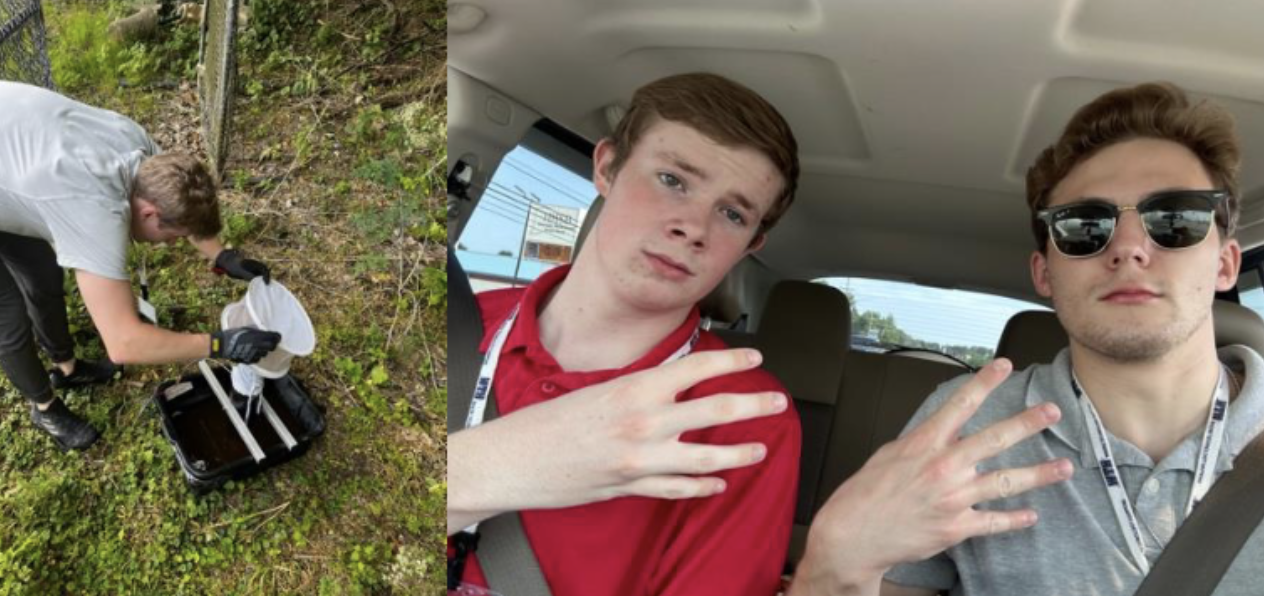
My go-to fun fact about myself for ice breakers is that I can grab a mosquito out of the air or off your arm, tell you what its biological sex is, and give a very educated guess as to what kind of species was annoying you–all thanks to now spending two consecutive summers studying the insects. This summer, I have continued my work within public health as an intern for the Montgomery County Health Department (MCHD), specifically focusing on vector-borne
illnesses. The bulk of my experience has entailed being entirely responsible for the
surveillance of West Nile Virus (WNV) within the county, a vector-borne disease amongst mosquito species under the Culex genus, and locating trapping sites to track Aedes albopictus, the secondary vector of WNV behind Culex species. Last summer, I worked with the vector management sector for the St. Joseph County Department of Health in South Bend, which is a significantly more urban area within Indiana compared to Crawfordsville–this was something I had to adapt to from my first day on the job this summer. Due to differences in budgets, development, and resources, I needed to pivot my approach to adjust for
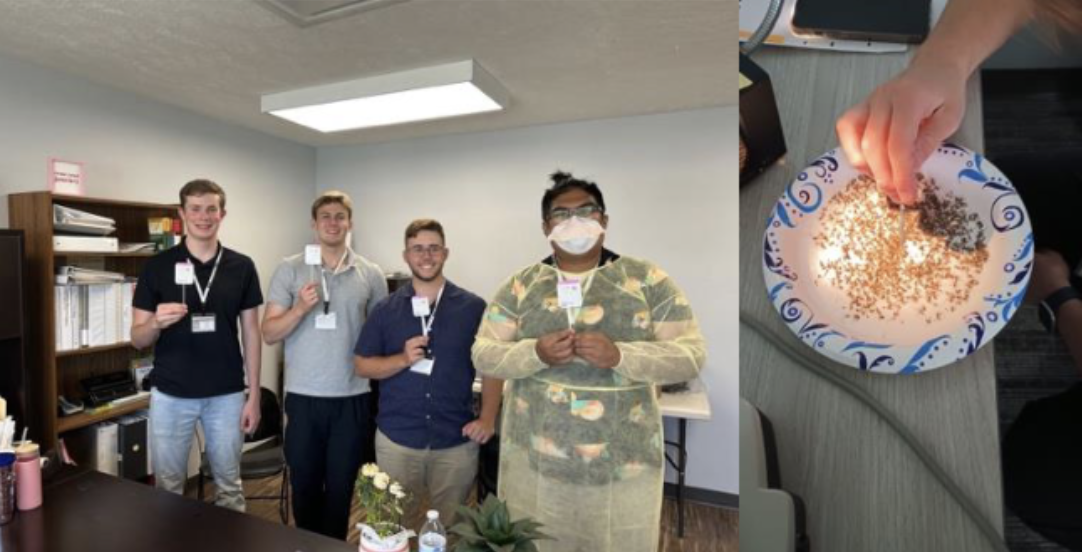
rural public health compared to my previous experiences within urban health departments. Besides vector management work, I also got the opportunity to do volunteer work with community partners, participate in important meetings, and understand more of the challenges that Montgomery County is actively addressing. Additionally, I gained some new skills such as administering COVID-19 tests on others, using some digital design software, and working with databases. I have further explored my passion of public health at the MCHD, understanding what some of the challenges that different counties face depending on where they are and what they have, and appreciating public health work that normally goes unnoticed and unappreciated by the community. Two consecutive internships with the GHI as a biology major on the pre-health track has made me more comfortable and confident with my career path and interest in medicine. I would like to give thanks to Aidan Mason ’26, Keegan Abney ’25, Kayden Beatty ’25, and Carl Suba ’25, four of my peers that I had the pleasure of working with. I’d like to give a special thank you to Diamond Teague, the community health educator for the MCHD, and Dr. Scott Douglas, M.D. ’84, the chief health officer for Montgomery County, for providing all their guidance and knowledge.
