
By Preston Reynolds
Entering through St. Florins gate in the Krakow ‘Old Town’, we entered into another world. The city center, which certainly lives up to its name, has portions dating back to the 13th century and some even further! There was a constant contrast between old and new, a conflict between Krakow’s internal and external reach. A passing pub ‘Pod Zlota Pipa’ featured a portrait of Franz Joseph of the late 19th century, most of the medieval city hall was torn down by Austrian councilors, and a stunning royal castle was principally used as a clothes hanger by Austrian Soldiers. Following Poland’s disappearance at the end of the 18th century, Krakow’s future was dictated by the stories and legacy of Austrian rule.
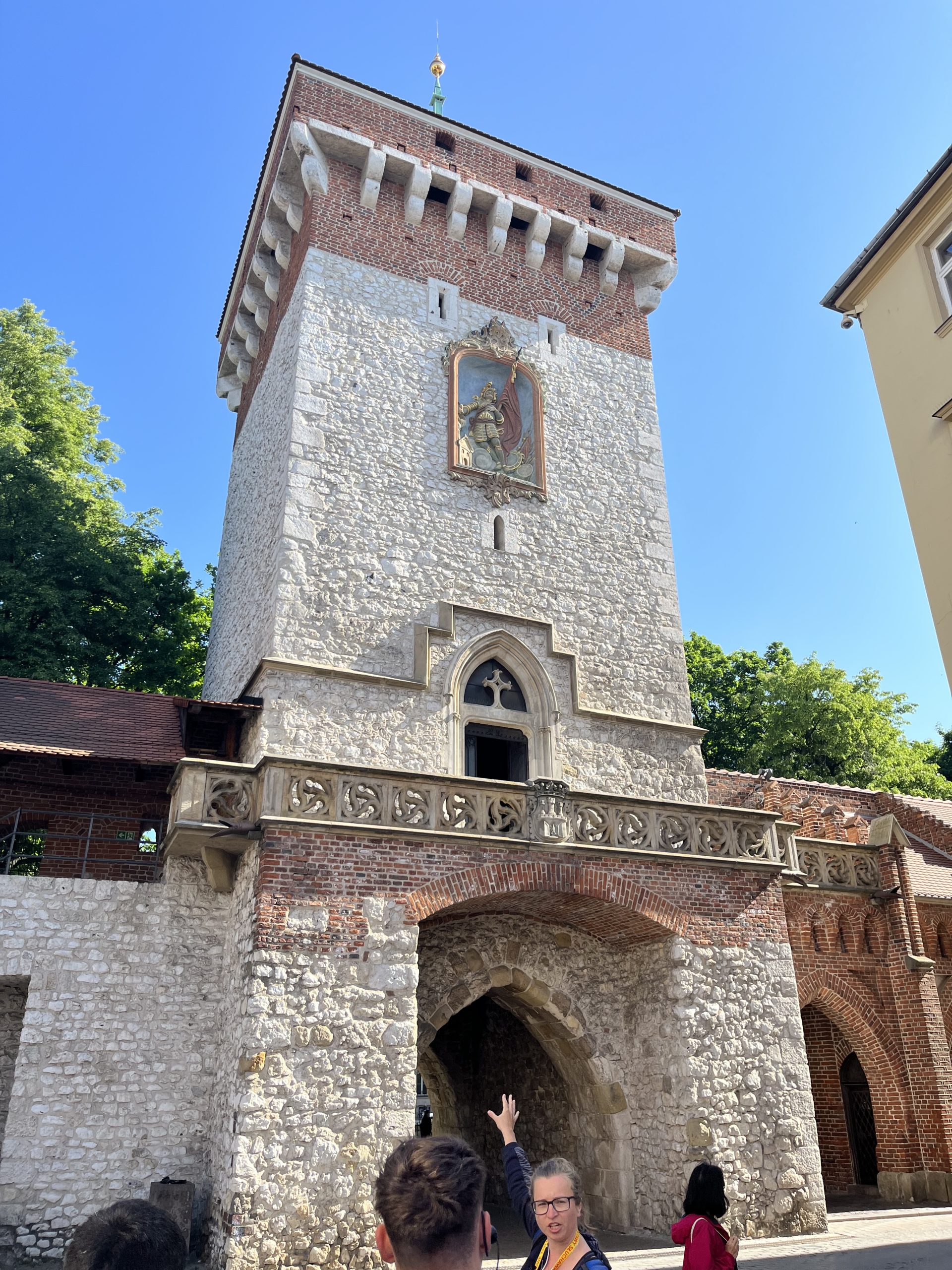
But in the present, Krakow both harnesses their medieval roots and reflects a modern world. The Cloth Hall stands at main square’s center, a symbol of the commercial and fiscal intersection Krakow used to represent. Now the beautiful monument is used as a museum and tourist vendor. The streets and alleys are lined with both kitschy cafes in renovated rooms, and 16th century cellars transformed into jazzy restaurants.

I find the contrast between the memory of ‘Old’ Krakow and its new status as a tourist hub to be best represented by their trumpeter. In remembrance of a 13th century Mongol invasion, every hour, a Cracovian trumpeter plays a tune from the top of their tower. This continues well into the night, when you are greeted by the odd treatment of Krakow’s night life. Just as the trumpeter sounds their tune, sidewalk criers attempt to draw you into a sports bar or strip club. The prominence of English bachelor (Stag) parties underlies the use of Krakow as a tourist playground. There is a lesson here about exploiting the past for profit or revitalizing an old city through reinvention, yet I am unable to put words to either. Krakow displays its historical beauty in the day, but in the night, it becomes a hole for tourist’s worst impulses.

