
by Nathan Powell ‘27 and Gerald Hutson ‘26
Our trip to Peru’s National Center for Social Research and Interculturality in Health was a great way to open up our immersion trip to the country. Getting a chance to collaborate with the National Institute of Health to explore their botanical garden was a great honor, and I would like to extend our gratitude to everyone who presented their research and was involved in showing us around.

The botanical garden is home to 250 species of Peruvian plants, all with medicinal applications, making this quite a magical garden of healing. In Peru, 76% of medical treatments come from indigenous medicines, rather than western medicine, making this garden a very important catalogue for many understudied yet critically important species.
One of the most interesting plants we were able to learn about is the Boton de Oro plant, Acmella ciliata (Kunth) Cass. This species is a small bush that grows in the jungle of Peru with many beautiful dime-sized yellow flowers. Interestingly, this plant is a multifruit meaning each fluorescence is actually a group of many tiny flowers. What makes this species so impactful is its pain relief qualities. Indigenous peoples of Peru would chew on the flowers of the plant for toothaches or rub them into their wounds and in return would be granted a few minutes of numbness. I actually got to try this plant as a part of our experience, and I was skeptical at first. However, as I felt the side of my mouth and face go numb it really changed my perspective as to the importance of these natural wonder medicines. The effects only lasted a few minutes, but I only had one tiny flower!
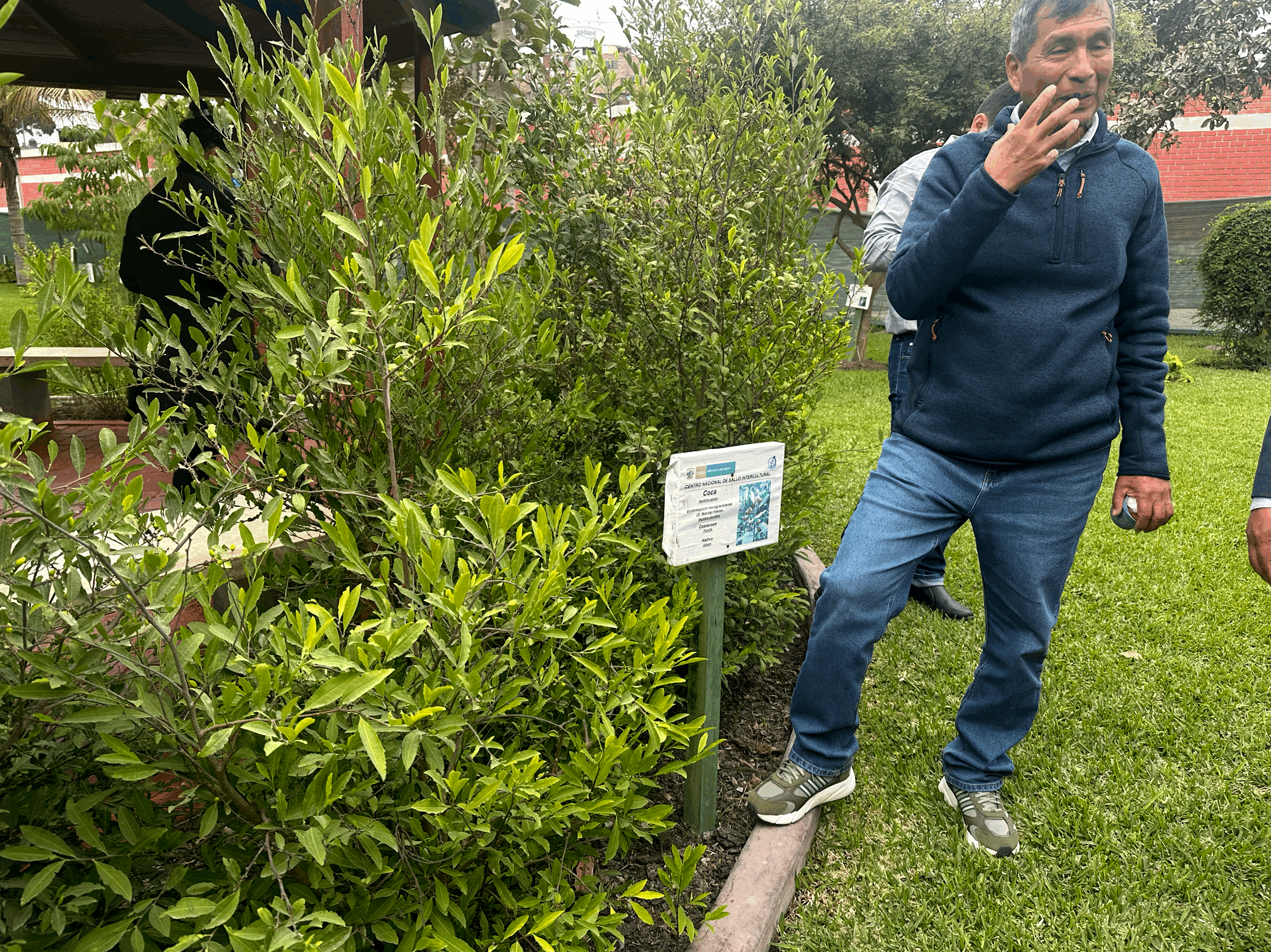
Another interesting species that we were able to learn about was the Coca plant, Erythroxylum coca. This shrub found in the highlands of Peru is a source of energy for the native people. America’s favorite energizing beverage, coffee, contains only one active alkaloid, caffeine, but this is nothing compared to the power of Peruvian Coca. There are 14 different energizing alkaloids found in the Coca plant, including cocaine, that synergistically work together to give a caffeine-like energy that also alleviates altitude sickness when the leaves are chewed and sucked over time. When working in high altitudes cultivating plants like quinoa or kiwicha, many Peruvians chew Coca as a way to increase their ability and duration of work. Coca is a staple of Peru and it’s psychoactive, drug containing leaves cannot be transported outside of the country. The protected nature of the plant makes it special to Peru, and it can be purchased easily all over the country!
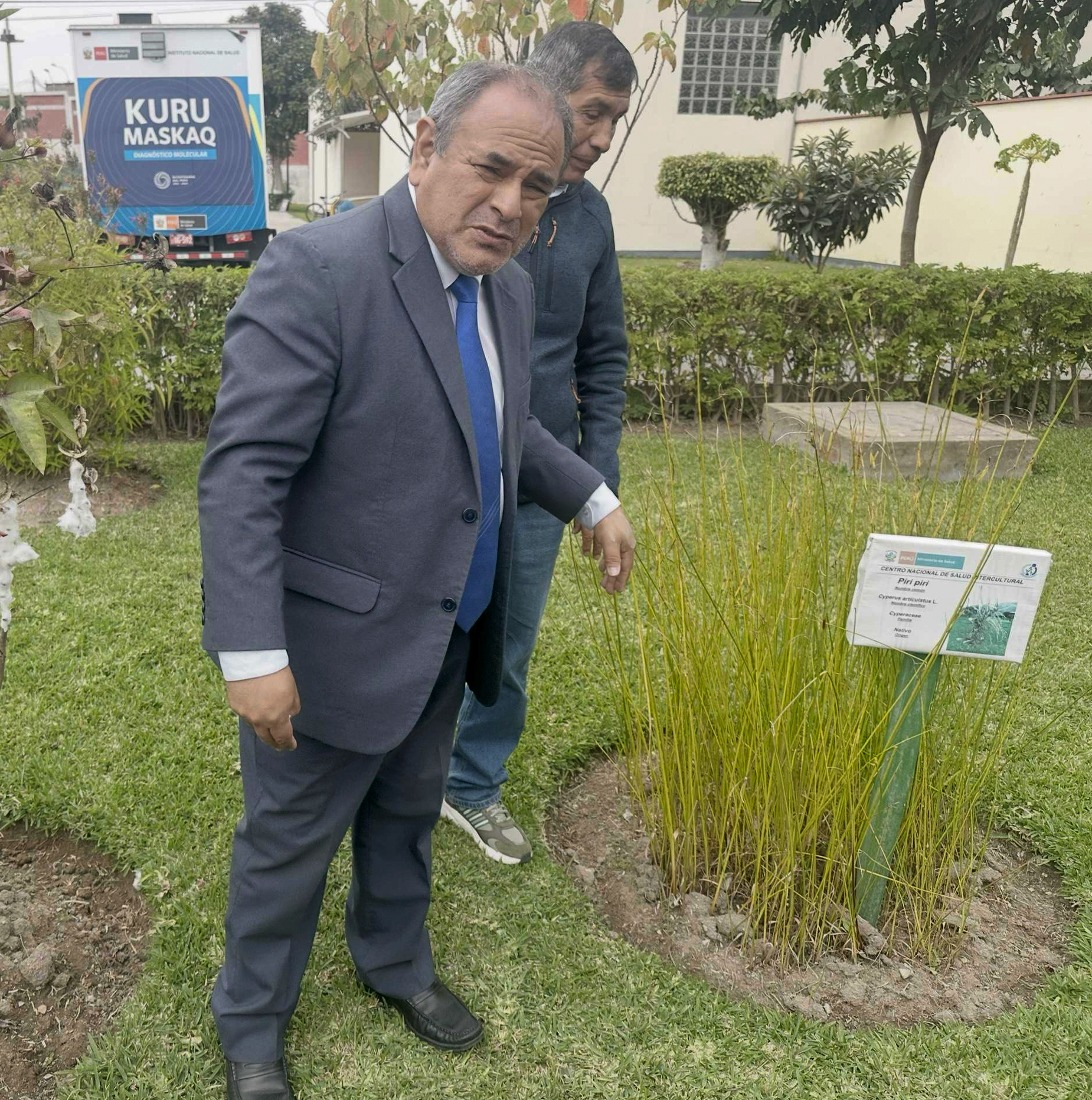
When at the coast of Peru the plant life looks much different compared to the immense variety seen in the jungle. One of these plants in particular is the Piri Piri, Cyperus articulatus L. This species produces chili peppers that can be used to make sauce for food but the medicinal/spiritual properties of the plant are much more interesting. The rhizomes of this species have been used to make perfume for hundreds of years. The perfume from this plant is also used in a ritual called “pusanga”, which involved a person putting the perfume on someone that they love in hopes that the feelings will be reciprocated.
