
by Ike O’Neill ‘27 and Brandon Hammer ‘26
Concealed behind construction barriers in the heart of Lima lies la Iglesia de San Franciso. It was on the penultimate day of our trip to Peru that our class ventured into the museum/monastery. Throughout the excursion, we were taken aback by awe-inspiring views of the mountainous landscape, universities clad in Peruvian culture, and cuisines which we had only heard of but never seen, let alone tasted.
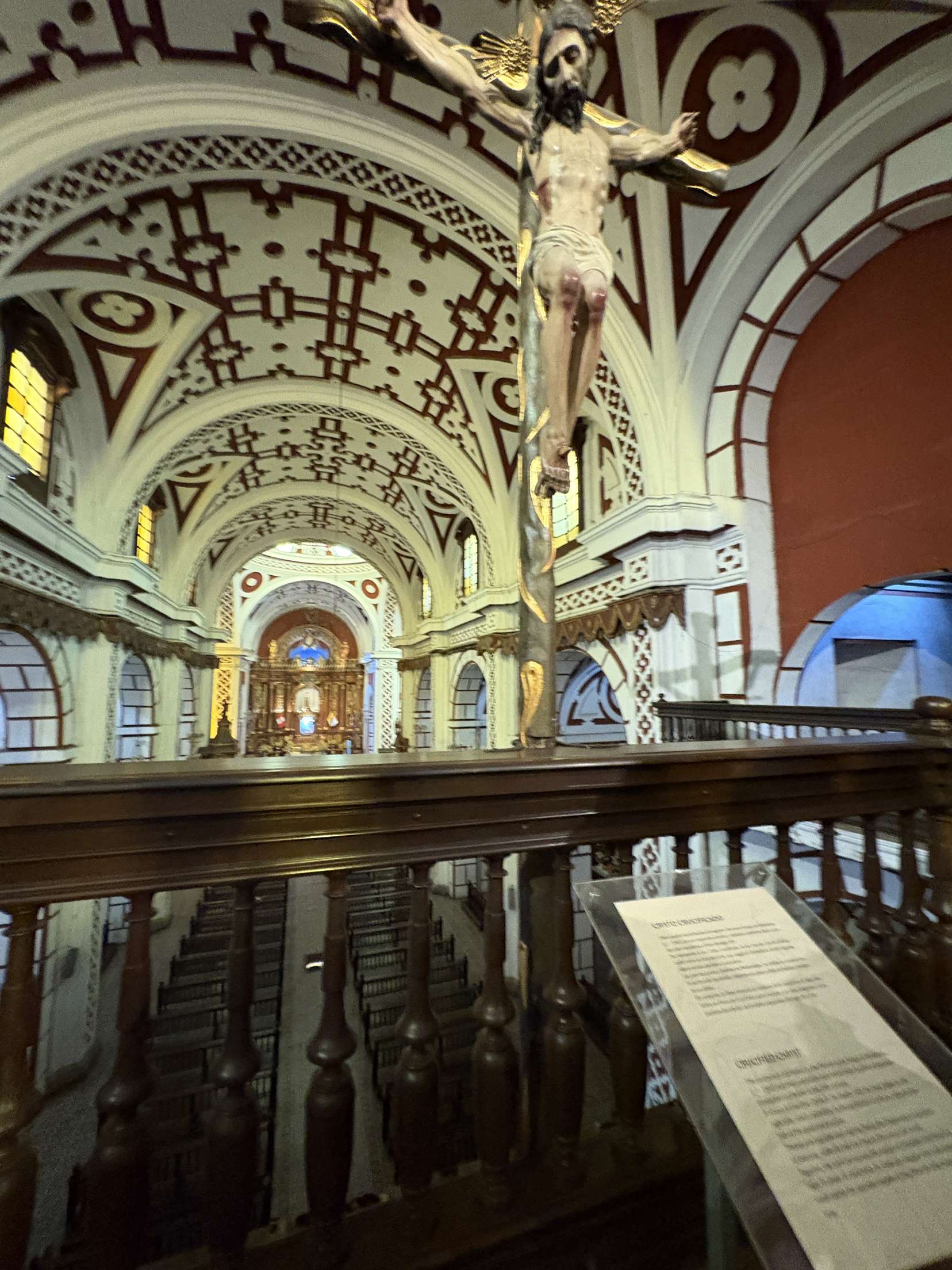
However, the monastery seemed out of place. On the exterior, it teemed with the architecture that was familiar to the other churches we had seen, yet the interior seemed as though it had been transplanted from a European cathedral. It was this element that struck many of us so deeply and brought the history of the friars to life. The library was one of the first surprises. Held through withered corridors, it was a space that felt entirely untouched by time.
We entered a vaulted room lined wall to wall with books, nearly 25,000 of them. Bound in cracked leather and dust, most were in Latin or Spanish. Though most of us could not understand the words that were seen, the weight of the centuries hung in the air like incense. Some of the books date back to the 16th century, and yet each book seemed to invite us in with wisdom still applicable today. For a moment, the room gave the sensation that the friars may appear to continue their work. It was quiet, with the sensation of respect for the years of wisdom held within the pages. Moving through the halls, we were surrounded in every direction by meticulously carved Spanish cedar and paintings that reflected the lives of saints even older than the Franciscan order. Yet among these paintings, tabernacles, and vestments stood a Peruvian nativity scene, invoking thoughts of the universality of religion and local adaptions onto each of us.
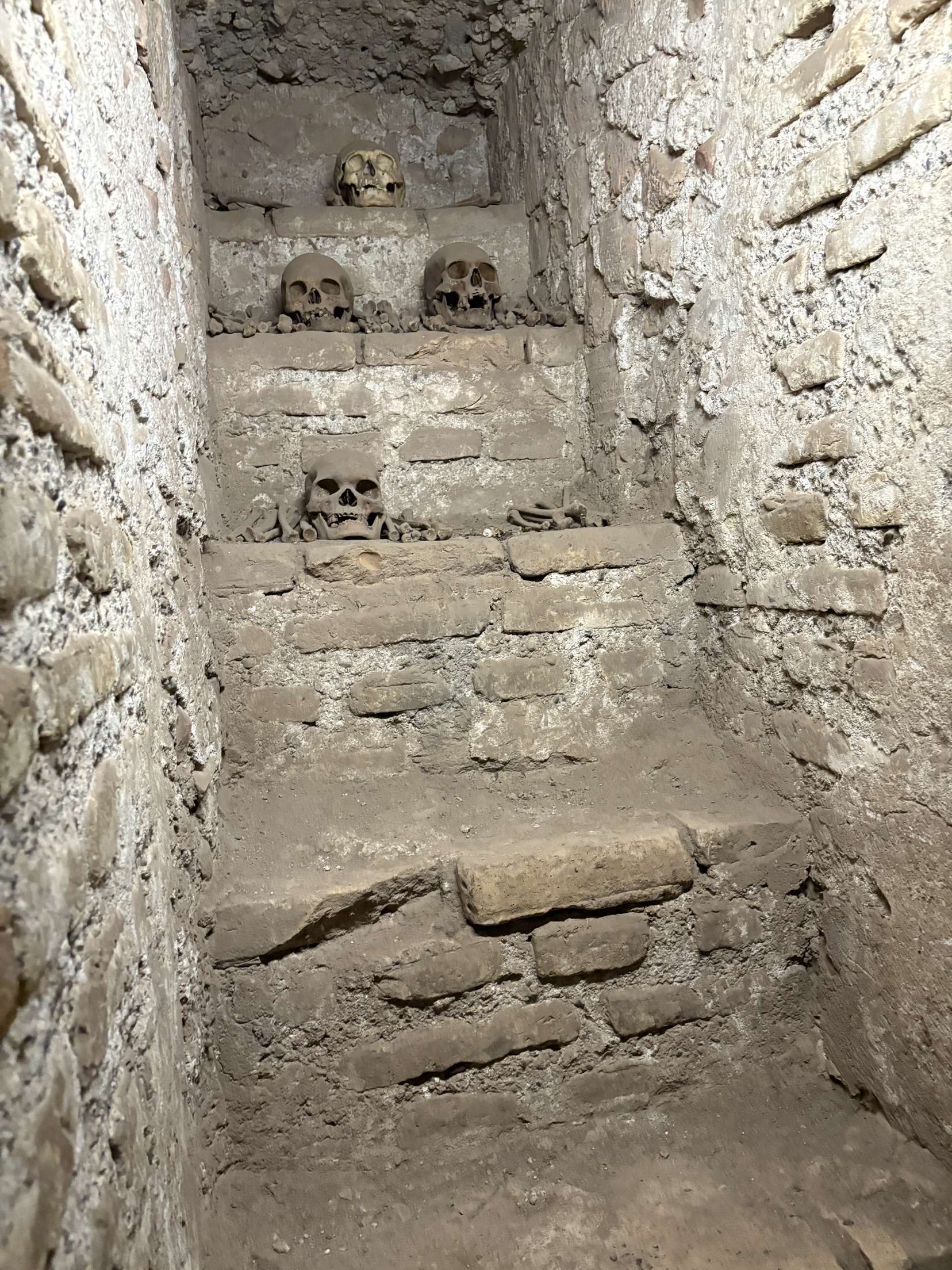
Then, we descended into the passageways of the catacombs. The men who built these, being larger in merit than stature, constructed a suffocating squeeze for many of us, and forced an intimate reflection with the bones of fallen. These bones, coupled with the reverent environment and the body odor of the tour-takers, created an atmosphere that can only be described as divine. The tour had quickly gone from an aesthetic marvel to a harsh encounter with one of very few universal constants, death. Each skull and femur stacked upon another reminded us that one day our time will pass, and our bones will turn simply into lifeless objects.
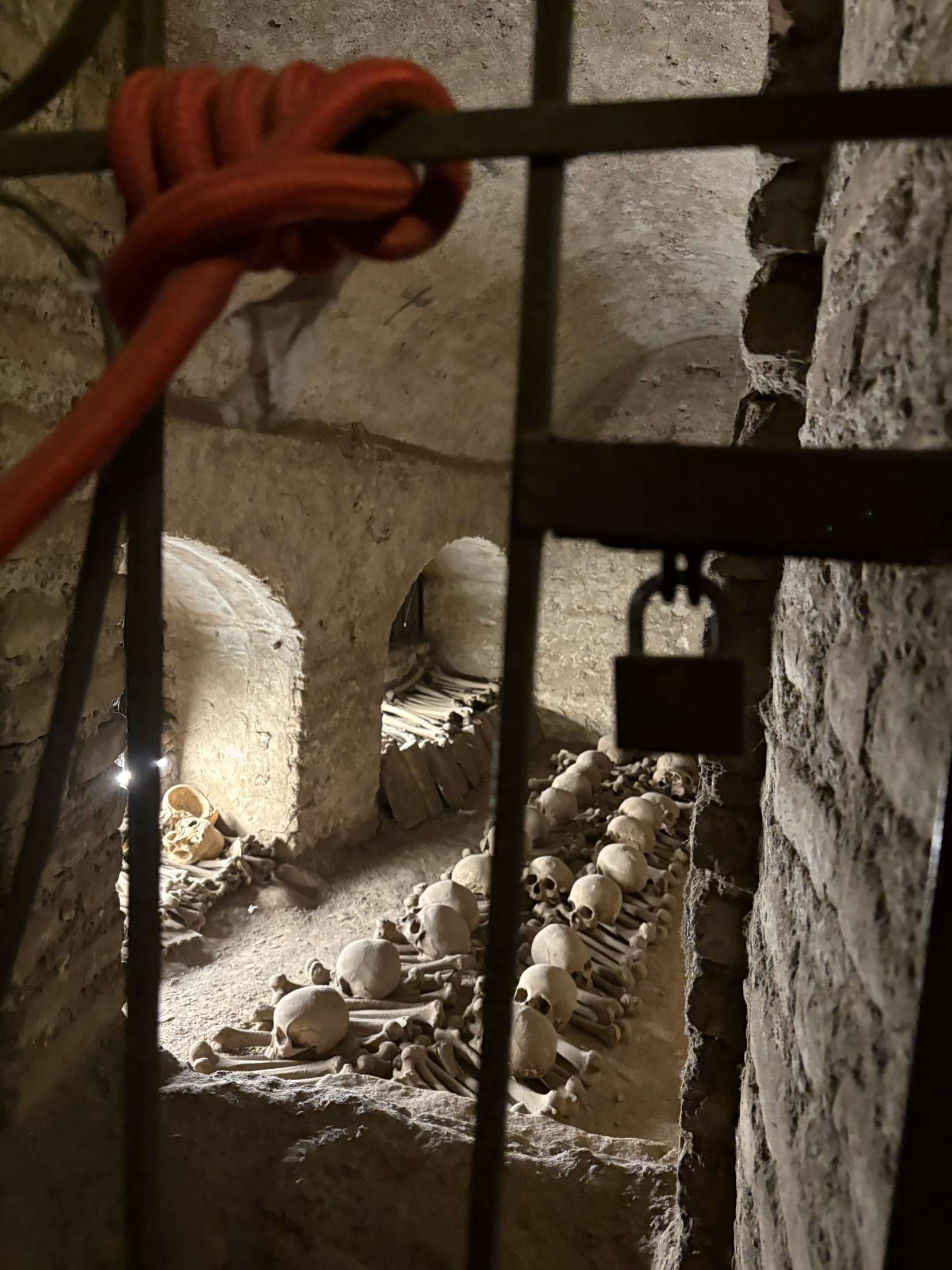
Coming back to the surface after such a close encounter with our own mortality, many of us began to ponder how we could live our lives so that they have a positive impact even after our time is up, whether that be in our home, our country, or in some bustling metropolitan in a different hemisphere.
