
by Ethan Cooper ’27 & Cole Shifferly ‘26
As I walked into the entrance, the walls were covered by flowers, tucked quietly in a neighborhood of Lima. Museo Larco felt more like a peaceful sanctuary than a museum. As soon as I summited the path to the top, where the garden laid, the noise of the city went silent. The sunlight hit the flowers, and wonderful smells radiated from everywhere.

Inside, the initial gallery seemed to be another world. Hundreds of different pieces of pottery, sculpted into many significant shapes. Humans transformed and mixed with animals, representing a higher power. Some pieces displaying battle, telling a story of warriors fighting for prosperity of their community. Then came the silver. Earrings that shined so bright, while also glittering softly in shadows. They were worn by people meant to be seen by their community. Leaders, priests, or maybe both. The weight of these were meant more than just for show, more for connection to the powerful and divine.
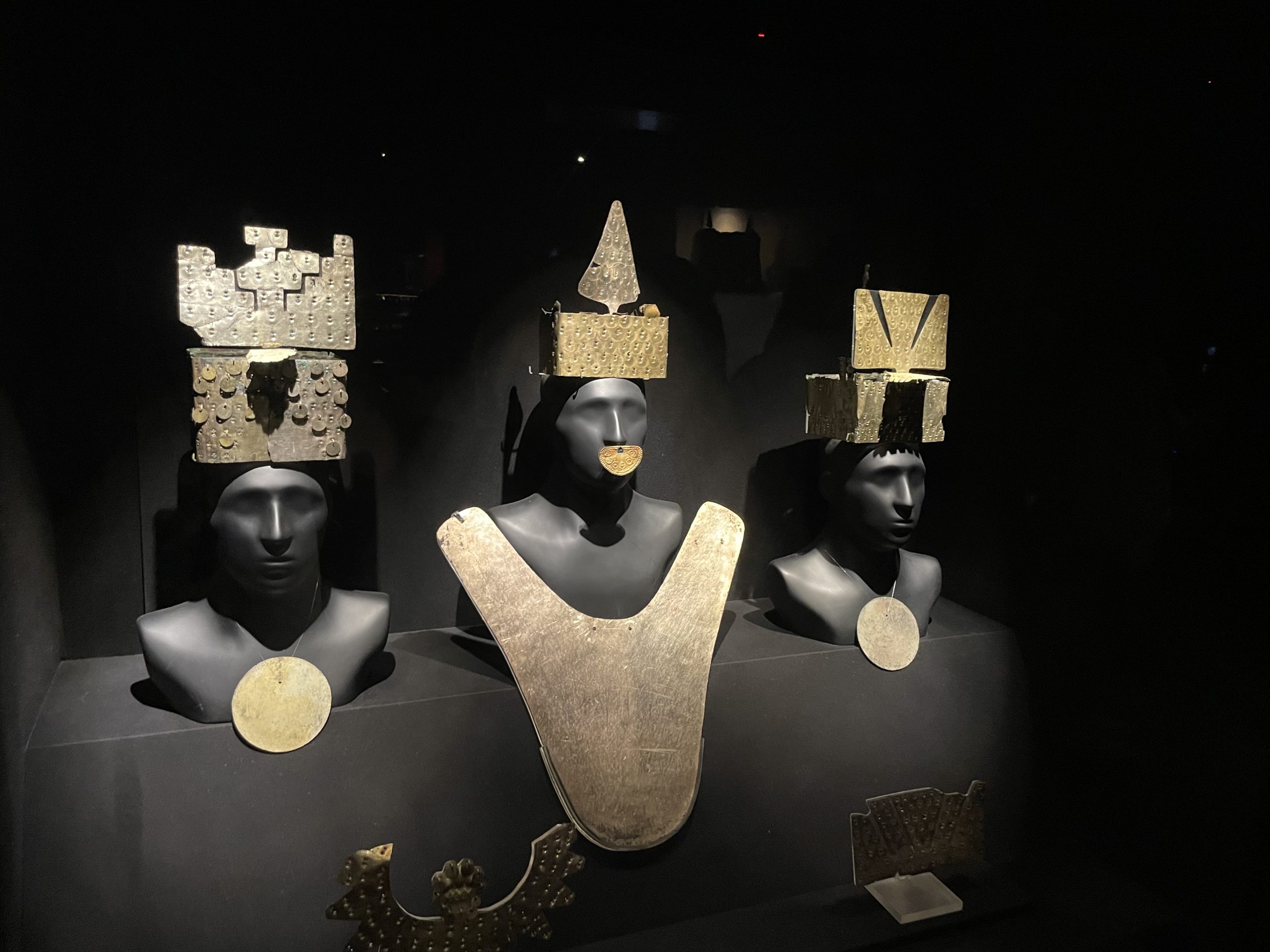
What was not expected was the child, tucked in a small, mummified figure, wrapped in many layers of soft cloth. In a display that looked fragile but powerful. The child must’ve been important to the community, a figure looked after and cared for by many. Then there was the ceremonial metalwork to be worn, that stood shining. Meant to harness the light of the sun and shine bright to all that witnessed. Gold chest plates and headdresses worn during the village’s rituals. These were powerful symbols that connected the wearer to a higher power. This was art, but it was identity that had purpose.

As I walked through the dimly lit, and somewhat eerie halls of Museo Larco, I reflected on the vast collection of artifacts laid out before me. These artifacts seemed to have a uniquely holographic nature to them. Immediately, they seemed simple, but as I explored further it seemed that the exhibits became full of more and more depth. Upon closer inspection, I realized that each of these artifacts was adorned with ornate drawings or carvings, and I became acutely aware that each item contained a plethora of symbolic information. Unlike the everyday items I was accustomed to, imagery seemed to be included ubiquitously.

The same trend was true for the ritual items. Made of a gold-copper alloy, these items were also ornately decorated. It occurred to me that each item I encountered, even the everyday ones, was decorated with care. I would later learn that imagery was a large part of how pre-inca civilizations remained spiritually connected to their world. On some items these images showed important themes like duality and mobility between spiritual existences. Others reflected the ability to obtain power using ritual items. These people included imagery in each of their items because the images reminded them of the spiritual workings of their worldview. Fortunately for me, these images also revealed the deeply holographic nature of pre-Incan spirituality.
