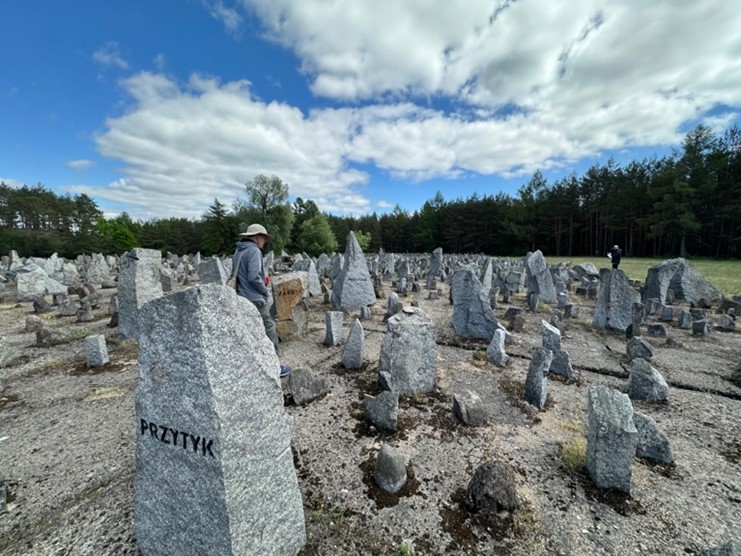
By Bennett Strain
When we went to the actual Treblinka concentration-camp grounds, we were able to walk the same path along the railroad tracks that the victims were taken on when being brought to the camp.
The Germans destroyed much of the camp in 1943 and planted trees over the land when deserting its operations; so, the memorial served to also teach visitors the camp’s layout. 17,000 stones are placed across the open field to resemble graves for the estimated 900,000 Jews murdered at the camp. 216 of the stones were labeled with the communities and towns that were affected.
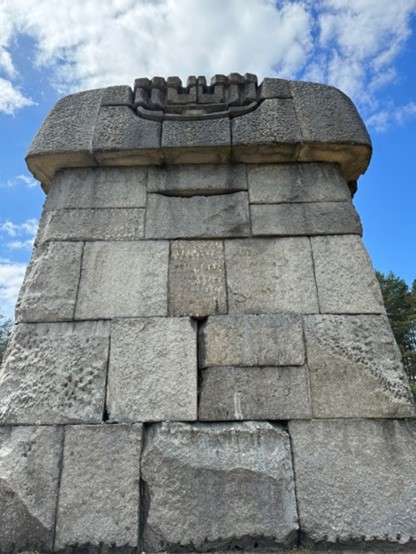
It was breath taking to say the least. The main monument towered over the rest and had a menorah on the back. As I was walking, birds chirped, the sun shined, and the flowers left a sweet scent for my nose – I felt wrong to experience these feelings.
I soon learned that this memorial was not placed to host any sort of discussion of the Nazis and mass-murder that happened, but to further imprint the memory and the beautiful humanity of those who fell. They were important people who must still be recognized and remembered as individuals.