Today, as we gather to recollect on the Founding of Wabash College and the meaning and history of the institution to which we all belong, I wanted to share a little piece of history from a Founders’ Day past I recently ran across on my exploration of the collections of the Ramsay Archival Center, located in the Lilly Library.

Many of us are familiar with the story and lore of the founding of Wabash College. Nine men were called to the home of Rev. James Thomson to establish a College in the Wabash County. One of our founders and faculty members, Edmund Otis Hovey, recalled it this way in his scrapbook, “Several of the ministering brethren of this Presbytery have associated themselves with a few laymen for the purpose of making a vigorous effort to get up a classical school of high character at Crawfordsville where a competent number of teachers may be trained to be spread over the country and teach the children of this rapidly populating district.” The following day, these men traveled to the new school’s location and gathered to bless the College and all those who would attend. Over the next three years, the College would continue to become established. Our first principal, Caleb Mills, arrived in 1833, ringing in the first class of students, a tradition that lives on to this day. In 1834, the College was officially charted by the State of Indiana, and in 1835, we selected our first president, Elihu W. Baldwin.

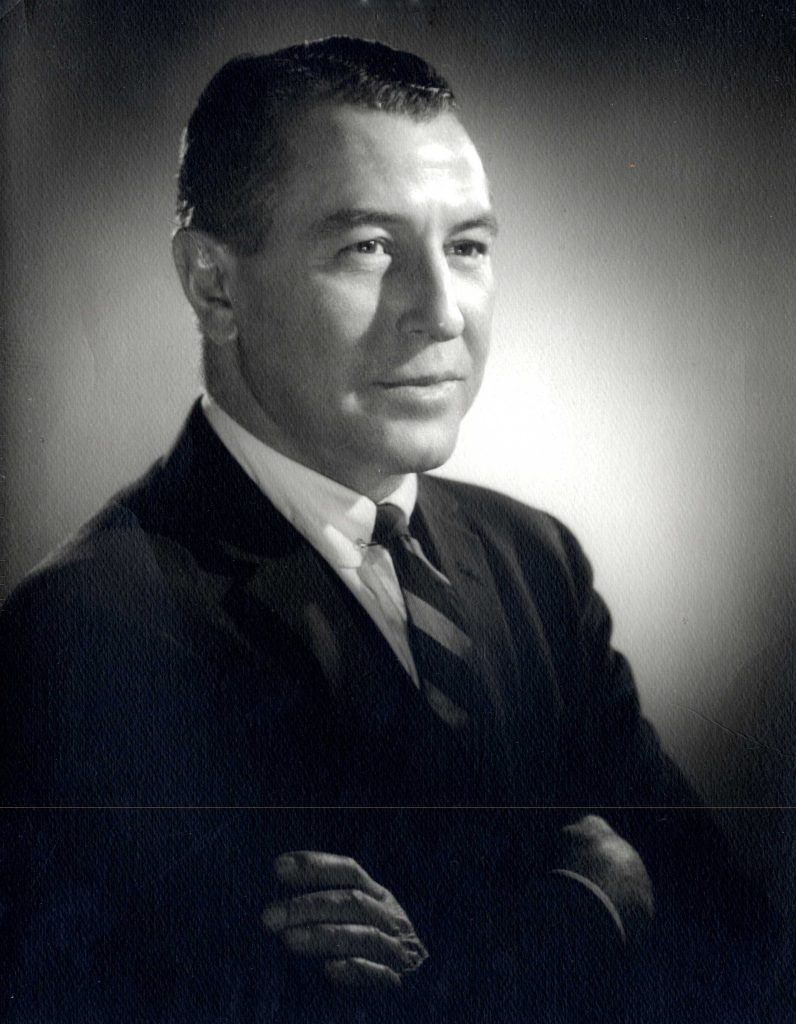
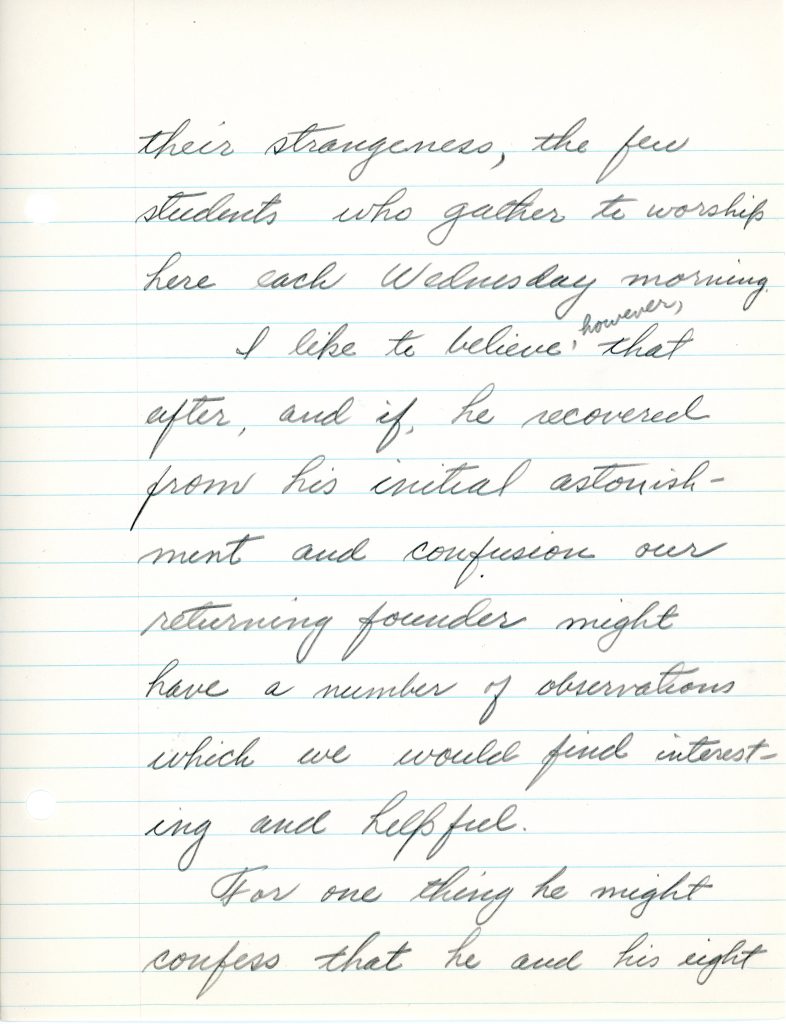
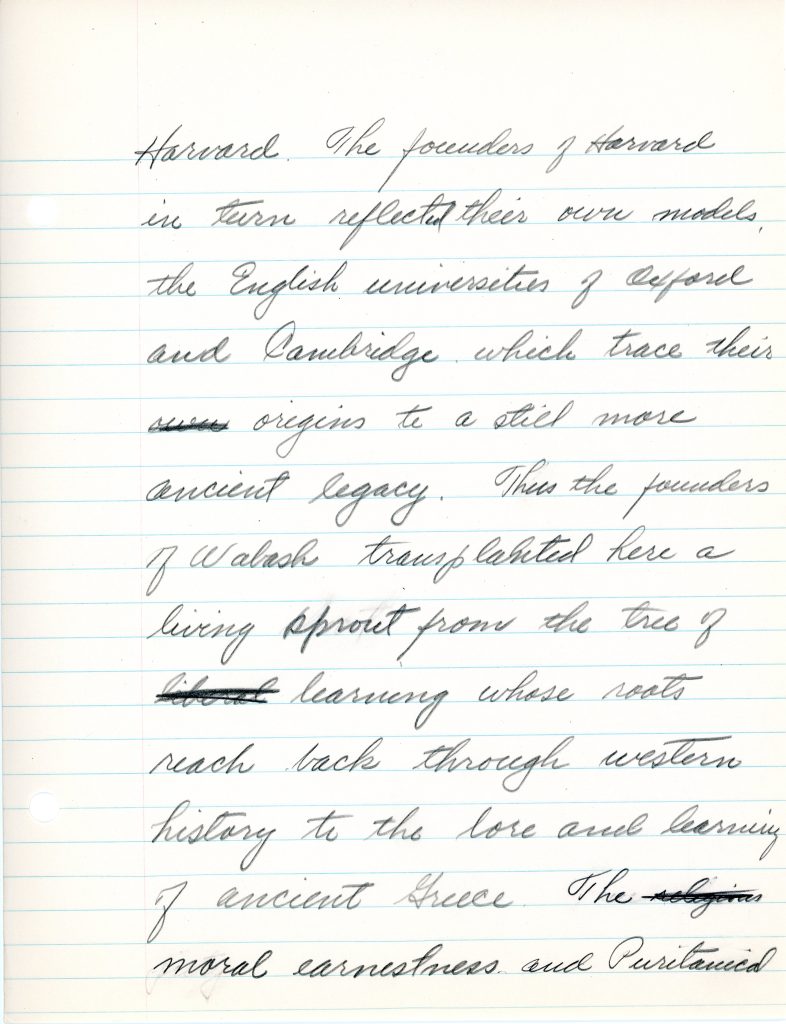
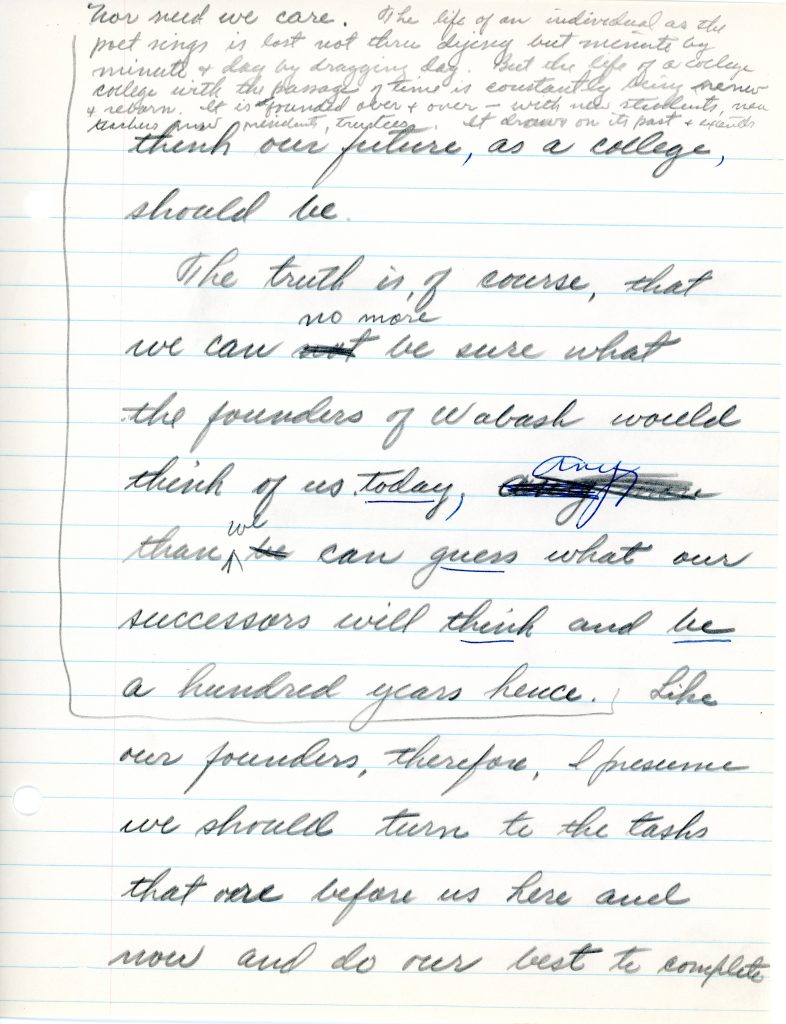
While this is a fascinating story, it is only its beginning.  When thinking about Founders’ Day, I often find myself observing those speeches and chapel talks given to commemorate this special day. I recently ran across the Founders Day talk by President Byron K. Trippet [W1930] on December 5th, 1960. President Trippet has always been a fascinating figure to me in the history of Wabash College. Not only did he graduate from Wabash in 1930, but he spent almost all of his academic career at Wabash as a faculty member, Dean of College, and President. When I ran across his handwritten Founders’ Day speech from 1960, I found myself transported to an assigned seat in the Chapel, books in my lap, and a freshman pot atop my head as President Trippet tells us the story of one of the founders returning to Wabash to see what became of the little school they established.    

I like to believe, however, that after, and if he recovered from his initial astonishment and confusion, our returning founder might have a number of observations which we would find interesting and helpful. For one thing he might confess that he and his eight friends, when they founded Wabash College, had no idea what it might become a century or a quarter later. “we were,” he might explain, “determined to meet what we regarded as the urgent educational needs of the Wabash Country in our own time. We never really thought much about the distant future. Ours was an immediate task to be done, and as individual men, we put our hands and thoughts and resources to that task. What has grown out of our initial efforts 128 years ago exceeds anything we ever expected or planned.”

“The men who organized Wabash were reflecting the influence of Eastern colleges, particularly of Dartmouth and Yale. But the founders of Dartmouth and Yale reflected the influence of Harvard. The founders of Harvard, in turn, reflected their own models, the English universities of Oxford and Cambridge, which trace their origins to a still more ancient legacy. Thus, the founders of Wabash transplanted here a living sprout from the tree of learning whose roots reach back through Western history to the lore and learning of ancient Greece…It is well for us to remember this interlocking character of colleges and universities of which our founders might remind us.”

“The truth is of course, that we can no more be sure what the founders of Wabash would think of us today, any more than we can guess what our successors will think and be a hundred years hence…Like our founders, therefore, I presume we should turn to the tasks that are before us here and now and do our best to complete them well. In doing this, the greatest tribute we can pay those hardy founders is to emulate their courage and their resolution.”

As I read this speech, one line stuck out to me, which was scrawled in the margins at the top of the page. “It prompts me to urge you, modern Wabash men, never to underestimate the distant consequences of the good efforts you can make now, however modest and unimportant they may seem to you.” We all play a role in the founding and history of Wabash College, and your actions, however modest and unimportant they may seem, will impact the College now and into the future. Thank you to all for what you are doing to add to the history of Wabash College!