

When Brandon Ruder ’27 started his summer internship on Monument Circle in downtown Indianapolis, he didn’t know quite what to expect. EdChoice was bringing in the Wabash College rising junior as a kind of experiment, as the leading public policy organization had not regularly hosted undergraduate interns. But a few months later, Brandon’s internship was so successful that he will continue working part-time for EdChoice as he resumes his studies.
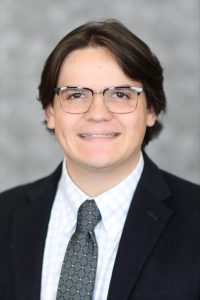
Given the affinities between Wabash’s Stephenson Institute for Classical Liberalism—which provided support for Brandon’s summer expenses—and EdChoice, the nation’s preeminent champion of educational freedom, the collaboration made a lot of sense. Indeed, when Brandon took the elevator up to the 26th floor of Salesforce Tower, he had already met Wabash alum Thomas Fisher ‘91, Executive Vice President and Director of Litigation at EdChoice Legal Advocates. Fisher initially helped connect Brandon with the organization and commented that Brandon “really impressed everybody” from the outset, sensing how to be both comfortable with new colleagues and ready to learn.
After settling in, Brandon primarily worked with EdChoice’s communications team, writing several posts on the organization’s in-house blog. Rolling up his sleeves to hit the keyboard, Brandon explored various aspects of school choice. His blog entries ranged from the success of specific programs like West Virginia’s Hope Scholarship, the nationwide increase in students participating in private school choice programs, the positive reception of microschools, and an analysis of public school funding and common criticisms of school choice.
Brandon quickly grasped that working with colleagues is an iterative process: “I would submit a draft and then I would get feedback… and then I just kept going until it was good.” This good performance and persistence resulted in Brandon having opportunities to work in many other departments of EdChoice. Chantal Fennell, Vice President of Communications, applauded Brandon for first noticing an important new metric in school choice, that private voucher programs had grown 25% in a single year: “Fresh eyes see patterns, ask different questions, and spot the obvious truths that others might skim past.”
“Brandon did such a great job,” commented Steve Holwerda, Executive Vice President of External Relations, who worked closely with him. “He was willing to do whatever work came his way.” Of course, ultimate success must first allow for the “freedom of individuals to make their own mistakes,” as EdChoice’s founder, Milton Friedman, once explained. Thus if Brandon messed up, he learned from the opportunity, leaving nothing on the table. And key to his upward trajectory was the support of EdChoice staff, who opened doors for Brandon and then kept them open: “If I had questions, I could always ask.”
* * *
Recognizing that many think tanks do important work outside of Washington, D.C., the Institute also helped another Wabash student learn about public policy work—in one of the largest and most influential states in the union.
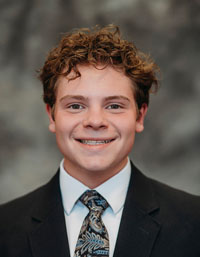
In May, Alex Kindig ’26 flew down to Austin, drawn to the Lone Star state’s strong entrepreneurial culture. As one of about two dozen interns at the Texas Public Policy Foundation (TPPF), considered one of the most prominent and largest state-based think tanks in the United States, Alex was one of the few non-Texans in his student cohort. But he found that its strong identity was “very genuine,” not abrasive or unwelcoming. “The people at TPPF are very driven and passionate about making Texas and America the freest places on earth,” Alex said.
Alex worked closely with the communications team, where he engaged in various projects, including filming podcasts and creating videos. “I learned a lot about video editing and communications, which are skills I can apply in various future roles.” This hands-on experience allowed him to interact with legislators and gain insights into the policy-making process, reinforcing his belief in the foundation’s impact. “It allowed me to see every side of the organization,” he explained, including TPPF’s work on education policy, criminal justice, government spending and taxes, border reform, and health care.
Alex appreciated the professional development opportunities TPPF organizes for their interns, such as weekly lunches with staff and a course on the “Philosophy of Freedom.” Additionally, his involvement in a service project to assist with cleanup of the summer’s historic flood damage showcased TPPF’s commitment to community engagement. Later, Alex was able to visit a homeless shelter in Austin, where “TPPF focuses on giving individuals agency over their recovery and return to society.”
Both Brandon and Alex discovered summer internships at policy organizations that offered more than just resume builders. They found mentors, developed real skills, and contributed meaningfully to causes they care about. In this way, The Stephenson Institute connects students and established policy organizations in a way that benefits everyone involved, opening the doors to future “Little Giants” of Wabash.
